

Rui Hachimura’s parents are Makiko Hachimura, his Japanese mother, and Zakari Jabil, his father, who is from Benin in West Africa and moved to Japan, where the couple met. They raised four children in Toyama Prefecture on Japan’s Sea of Japan coast, and all four carry their mother’s surname. Beyond those basics, both parents have stayed almost entirely out of the public eye: neither has given a published interview, and much of what circulates online about their ages, jobs or love story has no traceable source. This guide sets out what is widely reported about the family, what is not, and how their background shaped the NBA forward’s path from Toyama to the league.
The Hachimura family at a glance
| Person | Relationship | What is reported |
|---|---|---|
| Makiko Hachimura | Mother | Japanese; raised the family in Toyama |
| Zakari Jabil | Father | Born in Benin, West Africa; moved to Japan |
| Rui Hachimura | Eldest child | Born February 8, 1998, in Toyama Prefecture; NBA forward |
| Aren Hachimura | Younger brother | Born in 1999; professional basketball player in Japan |
| Amina Hachimura | Younger sister | Reported to have played college basketball in the U.S. |
| Fourth sibling | Younger sister | Not publicly named |
Makiko Hachimura: Rui’s Japanese mother
Makiko Hachimura is Japanese, and Japanese was the language of the Hachimura household. Rui has said in interviews that he grew up speaking Japanese, and he learned English only after moving to the United States for college, which is why his early press conferences at Gonzaga were often given through an interpreter.
Very little else about her is on the record, and that appears to be deliberate. When Rui arrived at Gonzaga in 2016, the university was reported to have kept his parents’ details out of its materials to protect the family’s privacy in Japan. The names became widely known only as his draft year in 2019 made him a national story.
That makes the Hachimuras different from some sporting families where a parent is part of the story. Ronda Rousey’s judo champion mother coached her from childhood, for example. Makiko Hachimura has no public sporting profile and has chosen not to build one.
Zakari Jabil: Rui’s father from Benin
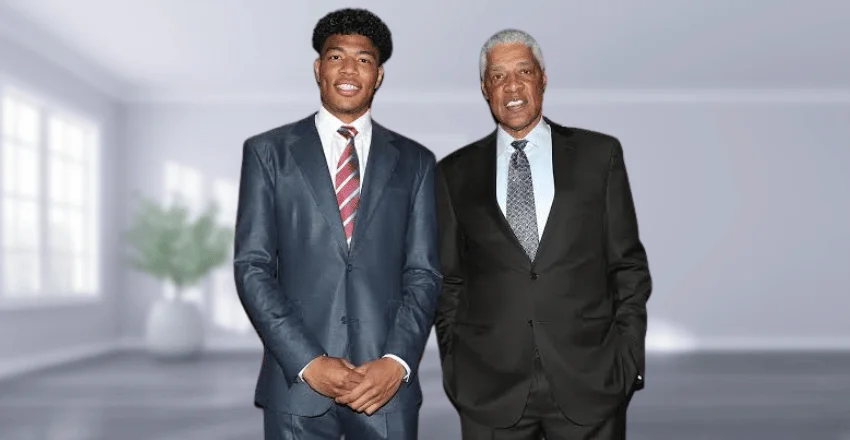
Rui’s father, Zakari Jabil, was born in Benin, a French-speaking country on the West African coast between Togo and Nigeria. He moved to Japan, met Makiko there, and the couple settled in Toyama. That is essentially the whole of the consistently reported record.
Many biography sites add details such as his exact age, his occupation, when he arrived in Japan or when the couple married. Those details vary from site to site and rarely cite a source, so treat them with caution. What is clear from Rui’s own comments over the years is that both parents supported his move away from home as a teenager and followed his career closely from Japan.
Why his surname is Hachimura, not Jabil
This is one of the most searched questions about the family, and the answer is administrative. Japan’s family registration system, the koseki, records a household under a single surname, and Japanese nationals are registered in it; foreign nationals are not entered in the same way. The children were registered with their Japanese mother, so they took the Hachimura name.
His first name has its own story. Rui has explained that his grandfather, a baseball fan, chose it: the kanji used for Rui, 塁, means “base,” as in a base on a baseball diamond. Fittingly, baseball was his first sport.
Growing up mixed race in Toyama
Rui was born on February 8, 1998, in Toyama. He played baseball as a young boy but switched to basketball in junior high. In interviews, including with The Spokesman-Review in Spokane, he has joked that he stopped because his throws were so hard that other kids could not catch them.
He has also spoken openly about standing out as a mixed-race child in Japan, describing being looked at as different and learning to live with it. Growing up between two cultures is a theme that comes up in many performers’ and athletes’ stories; Tanzyn Crawford’s upbringing between two countries covers similar ground.
From Toyama to Sendai, Spokane and the NBA
At 15, Rui left home to attend Meisei High School in Sendai, a leading basketball school, where his team won three straight national high school championships. Leaving home that young is a significant decision for any family, and it is one of the clearest signs of how much his parents backed his ambitions.
- 2016 to 2019, Gonzaga University: developed from a raw freshman into one of the best players in college basketball, winning the Julius Erving Award as the top small forward in 2019.
- 2019 NBA Draft: selected ninth overall by the Washington Wizards, becoming the first Japanese-born player taken in the first round.
- 2021 Tokyo Olympics: served as one of Japan’s flag bearers at the opening ceremony and played for the national team.
- 2023: traded to the Los Angeles Lakers, where he became a regular rotation player.
- 2024 Paris Olympics: represented Japan again.
Reports in mid-2026 said he had moved on from the Lakers in free agency. Rosters change quickly, so check the NBA’s official site for his current team and statistics.
What is confirmed about his parents, and what is not
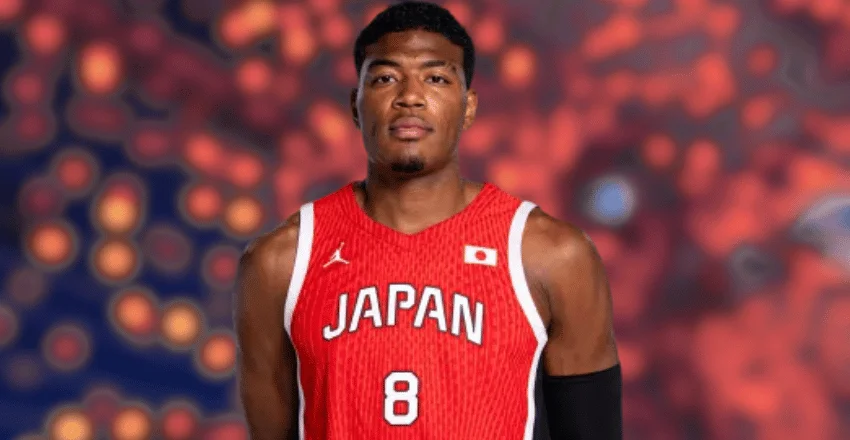
Pages about Rui Hachimura’s parents often copy each other, so a claim can appear on dozens of sites without anyone having checked it. Here is how the main claims stand:
| Claim | Status |
|---|---|
| His mother is Japanese and named Makiko Hachimura | Widely and consistently reported |
| His father is from Benin and named Zakari Jabil | Widely and consistently reported |
| He has three younger siblings: one brother and two sisters | Widely reported |
| His parents’ ages, jobs and wedding date | Not confirmed; figures online contradict each other |
| Quotes attributed to either parent | Treat with caution; no published interview is known |
| His parents’ net worth or where they live now | Not publicly disclosed |
His siblings, including a second pro player
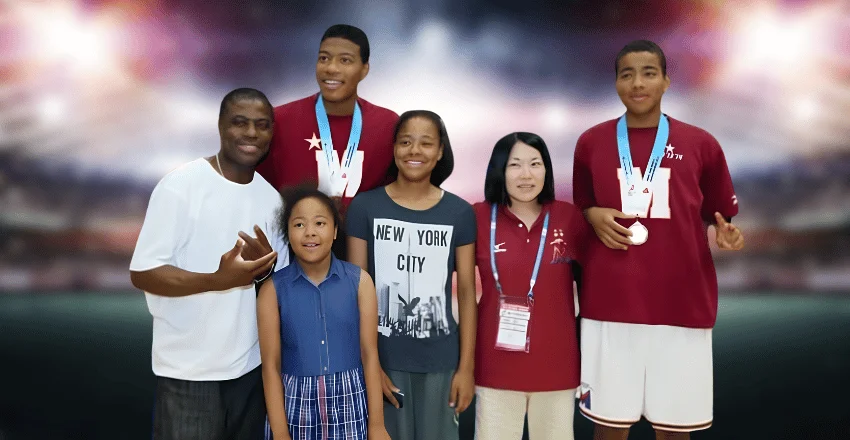
- Aren Hachimura (sometimes spelled Allen), born in 1999, is a forward who played university basketball in Japan and has gone on to play professionally in the B.League.
- Amina Hachimura is reported to have played college basketball in the United States and has kept a low profile.
- A second younger sister has never been publicly named, and it is right to leave it that way.
A family background often explains more about a player than a draft position does, as Vernon Maxwell’s family background also shows.
2021: when racism put the family in the headlines
In May 2021, Aren shared a screenshot of a racist direct message he had received on social media, which included a slur and told him to die. Rui responded publicly, saying he received messages like that almost every day. The episode prompted wide discussion in Japan about how mixed-race athletes are treated and brought unwanted attention to a family that had always avoided it. It also helps explain why their parents have continued to stay silent in public.
How his heritage shapes his public role
Rui is a Japanese national and has represented Japan in international competition, including two Olympic Games. At the same time he has embraced his Beninese heritage and become one of the most visible mixed-race public figures in Japan. For many young Japanese players with a parent from abroad, he is a reference point, and his openness about racism has made him an unofficial voice on the issue, even as his parents have stayed firmly in the background.
How to check claims about athletes’ families
Because family details spread from site to site, a few quick checks help separate reporting from repetition:
- Look for a named outlet and date. Profiles in established newspapers, team media or league sites carry more weight than anonymous biography pages.
- Check whether the athlete said it. Details Rui has given himself, such as the origin of his name, are far more reliable than numbers about his parents that appear nowhere in his own interviews.
- Be wary of precise figures without sources. Exact ages, salaries or net worth for private family members are usually guesses.
- Respect privacy. Parents and siblings who are not public figures, like the Hachimuras, are entitled to stay that way.
Frequently asked questions
Who are Rui Hachimura’s parents?
His mother is Makiko Hachimura, who is Japanese, and his father is Zakari Jabil, who is from Benin in West Africa.
Is Rui Hachimura Japanese?
Yes. He was born in Toyama, Japan, is a Japanese national and plays for Japan internationally. His heritage is half Japanese and half Beninese.
Why doesn’t Rui Hachimura have his father’s surname?
Japan’s family registration system records a household under one surname. The children were registered with their Japanese mother, so they took the name Hachimura.
Does Rui Hachimura have siblings?
Yes, three younger siblings: a brother, Aren, who plays professional basketball in Japan, and two sisters, one of whom has not been publicly named.
Where did Rui Hachimura grow up?
He grew up in Toyama Prefecture, moved to Sendai at 15 to attend Meisei High School, and went to Gonzaga University in Spokane, Washington, in 2016.