

Rune King Thor represents one of the most dramatic transformations in Marvel Comics history. The form emerges during a desperate attempt to understand and permanently break Asgard’s repeating Ragnarok cycle. Instead of gaining power through another weapon, the Asgardian reaches a new level through sacrifice, knowledge, and ancient runes.
Quick answer: This transformation combines inherited divine power with knowledge gained through the ancient runes. The character can understand forces hidden from ordinary gods and interfere with the cycle controlling Asgard. His defining story appears near the end of the 1998 Thor series, especially issues #80–85.
| Key fact | Details |
|---|---|
| Marvel character | Thor Odinson |
| Main storyline | Ragnarok / Avengers Disassembled |
| Key comic run | *Thor* (1998) #80–85 |
| Writer | Michael Avon Oeming |
| Main penciller | Andrea Di Vito |
| Main new ability | Knowledge and use of ancient runes |
| Major goal | End Asgard’s repeating Ragnarok cycle |
| Key enemies | Loki, Mangog, Those Who Sit Above in Shadow |
| MCU status | No official confirmation of this transformation as of October 2026 |
The main thing to remember is that this is not simply another costume or permanent alternate character. It is a specific state reached during a short, high-stakes storyline. Marvel’s collected edition confirms that the relevant Ragnarok story spans issues #80 through #85.
Who Is Rune King Thor?
This version appears when the usual methods of protecting Asgard are no longer enough. Ragnarok has returned, and the hero begins searching for knowledge rather than relying only on physical strength. That decision changes the direction of the entire conflict.
The storyline connects power with understanding, which separates this form from many superhero upgrades. The hero follows trials associated with Odin and seeks wisdom capable of revealing Ragnarok’s deeper cause. Marvel’s official collection describes his journey as repeating Odin’s ordeals while searching for new knowledge.
The result is a character who can perceive truths that were previously hidden from him. He no longer sees Ragnarok as one isolated battle that can be won through force. He recognizes a larger cycle involving Asgard’s destruction, rebirth, and the forces benefiting from that repetition.
How the Transformation Happens
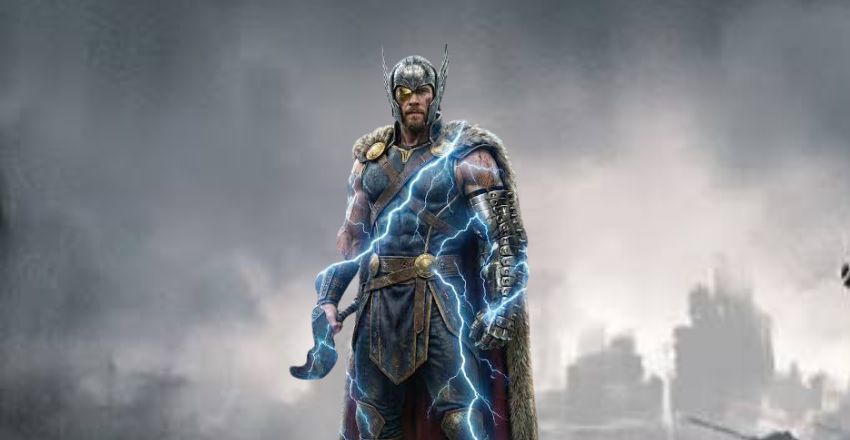
The road to this form begins with sacrifice rather than victory. The Asgardian seeks knowledge connected with Mimir and eventually pays a severe personal price for greater understanding. He then undertakes an ordeal tied to Yggdrasil and the ancient runes.
These events intentionally echo Odin’s search for wisdom in Norse-inspired mythology. The difference is that the son pushes his sacrifice further as he searches for knowledge his father never fully possessed. The transformation therefore represents intellectual and spiritual change alongside a dramatic increase in power.
The runes matter because they provide more than another source of destructive energy. They allow the hero to understand hidden patterns surrounding fate and the repeating destruction of Asgard. That knowledge becomes more important than simply hitting an enemy harder.
Why Ragnarok Changes Everything
Ragnarok normally means another catastrophic end for the Asgardian gods. In this storyline, the conflict becomes more troubling because destruction is part of a repeating system. Ending one battle would therefore leave the larger problem untouched.
The hero eventually discovers forces associated with this cycle and chooses to attack its foundation. That makes the final conflict fundamentally different from an ordinary fight against Loki. His objective becomes freedom from repetition rather than survival for another round.
Marvel’s own description frames the arc around this dilemma. It asks whether Asgard’s defender will save the realm or become the architect of its downfall. That tension explains why destruction can become part of the solution.
Rune King Thor Powers and Abilities
The character still possesses the immense physical abilities associated with an Asgardian god. Strength, durability, energy control, combat skill, and inherited divine power remain important. The runes then add knowledge and supernatural abilities beyond his familiar battlefield toolkit.
His greatest advantage is awareness. He can recognize forces and relationships that ordinary perception cannot reveal. That lets him challenge a system governing Asgard rather than fighting only the characters operating inside it.
Several abilities are commonly associated with this form:
- Rune knowledge: Ancient runes provide supernatural understanding and magical capability beyond his earlier powers.
- Enhanced perception: He gains awareness of hidden truths surrounding Ragnarok, fate, and the gods.
- Odin-derived power: He already carries immense royal Asgardian power before completing his transformation.
- Energy and magical attacks: His heightened state lets him overwhelm enemies who previously represented major threats.
- Resistance and durability: His physical and mystical defenses operate at an exceptionally high level during the storyline.
Power-scaling discussions sometimes describe these abilities with labels such as universal or multiversal. Those labels are fan interpretations rather than official numerical Marvel rankings. The safer approach is to compare what the character actually accomplishes on the page.
His Most Important Feats
One major feat is his treatment of Mangog, a creature traditionally dangerous enough to threaten Asgard itself. The transformed hero deals with that threat far more easily than readers might expect from earlier encounters. The scene demonstrates how much his position has changed.
His more important achievement concerns the mechanism behind Ragnarok. In the final part of the story, he destroys the Loom of the Fates and breaks the cycle binding the Asgardians. Contemporary issue descriptions identify the destruction of the Loom as a central event in Thor #85.
This feat matters because it changes the rules instead of winning another conventional battle. The hero identifies the structure producing repeated destruction and removes it. That is why discussions of this form often focus on knowledge and fate rather than raw lifting strength.
Is This the Strongest Version of the Character?
There is no permanent Marvel power chart that settles every version across every storyline. Writers change, circumstances change, and characters sometimes receive temporary abilities that disappear later. Calling any incarnation definitively strongest therefore requires some caution.
This form certainly belongs among the character’s most powerful comic states. Its combination of inherited power, rune knowledge, and unusual feats gives it a strong case. Yet modern rankings sometimes place versions such as Old King above it, showing that the question remains debatable.
That distinction matters for U.S. readers encountering exaggerated social-media claims. Terms such as “omnipotent” are often used loosely in fan debates. The original comics provide a better basis for comparison than unsupported ranking graphics or viral clips.
What Comics Should You Read?
The easiest route is Marvel’s Avengers Disassembled: Thor collection. Marvel states that the trade paperback collects issues #80–85 of the 1998 series. That gives readers the complete final Ragnarok sequence in one volume.
Issue #80 begins the “Ragnarok Part 1” storyline and establishes Asgard’s approaching disaster. Marvel lists Michael Avon Oeming as writer and Andrea Di Vito as penciller for that issue. The complete collection then carries the story through the sixth and final chapter.
Readers interested in other fantasy characters can also browse Newsloger’s Luz Noceda character guide. For broader comic-related screen coverage, the site’s Lukas Haas and Spider-Noir profile provides another entertainment-focused read. You can also return to the Newsloger homepage for recently published entertainment and pop-culture coverage.
Is This Form Coming to the MCU?
As of October 2026, Marvel has not officially announced this comic transformation for an upcoming movie. Online speculation has increased because fans continue discussing possible new powers in future Avengers projects. Speculation, however, should not be treated as a casting announcement or confirmed storyline.
A 2026 rumor claimed Odin might somehow help the cinematic hero obtain a new power. The report specifically noted that its source did not confirm the Odinforce or this rune-based transformation. That leaves the popular theory unverified.
Marvel’s official Avengers: Doomsday material has discussed returning characters and major crossover elements. It has not confirmed this particular form in the available official announcements. Until Marvel Studios says otherwise, fans should treat related videos and social posts as theories.
Why the Story Still Attracts So Much Attention
The appeal comes from more than high power levels. The storyline transforms a familiar superhero conflict into a story about whether fate itself can be rejected. Its hero wins through understanding the system behind the war.
That makes the arc particularly useful for readers who usually see the character through movies. The comics explore a stranger and more mythological side of Asgard than most screen adaptations. They also show why sacrifice and knowledge can matter more than another weapon.
The short length helps new readers as well. You do not need hundreds of issues to reach the central storyline. Six core chapters provide the complete Ragnarok sequence collected by Marvel.
Frequently Asked Questions
What comic is Rune King Thor in?
The central storyline appears in Thor (1998) #80–85. Marvel collected those six issues in Avengers Disassembled: Thor. Issue #80 begins Ragnarok, while the later chapters contain the transformation and final resolution.
Is this form stronger than Odin?
The storyline strongly suggests that the son reaches knowledge and abilities beyond what Odin achieved in the same cycle. That does not create a universal rule for every comic appearance. Marvel characters can vary considerably between writers and eras.
Is he more powerful than regular versions?
Yes, this state has abilities and awareness that his ordinary form does not normally possess. Rune knowledge changes how he interacts with fate and mystical forces. His achievements during Ragnarok also place him far above his usual operating level.
Did this version appear in the MCU?
No official Marvel announcement has confirmed that transformation as of October 2026. Recent online claims remain rumors and fan theories rather than studio confirmation. Future movies could adapt the concept differently, but that remains speculation.
The Bottom Line
This storyline works because its central conflict is not simply about becoming stronger. The hero gains enough knowledge to understand why Asgard keeps reaching the same catastrophic ending. He then chooses to break that structure instead of preserving it.
For new readers, Thor #80–85 remains the clearest place to experience the story from beginning to end. Start with Marvel’s collected Ragnarok arc before relying on power-scaling summaries. That approach makes the character’s sacrifices, abilities, and final decision much easier to understand.