


In the fast-moving world of PC hardware, most graphics cards are forgotten within a few years. However, the GTX 1080 Ti is the rare exception that has achieved “legendary” status. Released in 2017, this flagship of the Pascal architecture didn’t just move the needle; it broke the scale.
Even in 2026, gamers and hardware enthusiasts still speak of the 1080 Ti with a mix of nostalgia and genuine respect. This GTX 1080 Ti explained guide will break down the technical specifications, real-world gaming performance, and the unique reasons why this card continues to hold its own nearly a decade after its debut.
| Category | Details | Performance Insight | Relevance Today |
| GPU Architecture | NVIDIA Pascal (GP102) | High efficiency for its generation | Still strong for raster gaming |
| CUDA Cores | 3584 | Excellent parallel processing power | Competes with mid-range modern GPUs |
| VRAM | 11GB GDDR5X | Handles high-resolution textures | Still sufficient for most games |
| Memory Bus | 352-bit | High bandwidth for smooth performance | Supports stable 1440p gaming |
| Core Clocks | Boost up to ~1582 MHz | Strong out-of-the-box performance | Good overclocking headroom |
| TDP | 250W | High power consumption | Requires strong PSU & cooling |
| 1080p Gaming | Ultra settings, 100+ FPS in many titles | Extremely smooth performance | Overkill for esports gaming |
| 1440p Gaming | 60–100 FPS in AAA games | Sweet spot performance | Still highly playable |
| 4K Gaming | 30–60 FPS (optimized settings) | Playable but demanding | Entry-level 4K experience |
| Ray Tracing | Not supported | No RT hardware cores | Behind modern RTX GPUs |
| Key Strength | Raw raster performance | Very strong traditional rendering | Still competitive in budget builds |
| Main Weakness | Power efficiency & missing modern features | Lacks DLSS & RT | Aging but still usable |
| Legendary Status | Long lifespan, high value, strong reputation | Loved by gamers worldwide | Still popular in used market |
| Best Use Case | 1080p & 1440p gaming | Stable high FPS performance | Ideal budget gaming GPU |
Technical Specifications: The Power of Pascal
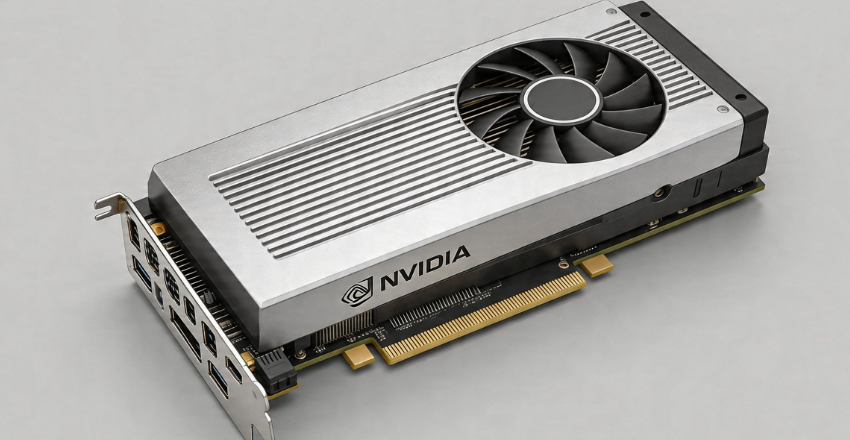
The GTX 1080 Ti was built on NVIDIA’s 16nm Pascal architecture, specifically the massive GP102 silicon. While modern cards focus heavily on specialized AI cores, the 1080 Ti focused on raw, unadulterated “brute force” performance.
Core Hardware Breakdown
With 3,584 CUDA cores and a massive 11GB of GDDR5X VRAM, the card was designed to crush 4K gaming at a time when most people were still transitioning to 1080p. Its 352-bit memory bus provided a bandwidth of 484 GB/s, a figure that still rivals many mid-range cards released today.
GTX 1080 Ti Key Specifications Table
| Feature | Specification Details |
| Architecture | NVIDIA Pascal (GP102) |
| CUDA Cores | 3,584 |
| Base / Boost Clock | 1481 MHz / 1582 MHz |
| VRAM Capacity | 11 GB GDDR5X |
| Memory Interface | 352-bit |
| Memory Bandwidth | 484.4 GB/s |
| TDP (Power Draw) | 250 Watts |
| Launch Price | $699 USD |
7 Reasons the GTX 1080 Ti Remains a Legendary GPU
Why do we still talk about this card? It isn’t just about the numbers on a spec sheet. It’s about how those numbers translated into an unprecedented lifespan.
1. The VRAM “Sweet Spot”
Long before “VRAM anxiety” became a common term, NVIDIA equipped the 1080 Ti with 11GB of VRAM. This was overkill in 2017, but it became a lifesaver in the 2020s. Modern AAA titles frequently exceed 8GB of memory usage, causing newer budget cards to stutter while the 1080 Ti sails through.
2. Massive Leap Over the 1080
Usually, a “Ti” variant offers a 10–15% boost. The GTX 1080 Ti offered a staggering 35% performance increase over the standard GTX 1080. It was essentially a Titan-class card disguised as a consumer-grade product.
3. Reliability and Overclocking Headroom
These cards were overbuilt. Many premium models from EVGA, ASUS, and MSI featured robust cooling and power delivery that allowed users to push clock speeds well beyond the factory boost, further extending its competitive life.
4. Raw Rasterization King
Before Ray Tracing (RT) and DLSS dominated the conversation, “rasterization” (raw rendering) was all that mattered. In pure rasterized performance, the 1080 Ti is so potent that it still matches or beats modern cards like the RTX 3060 in many traditional benchmarks.
5. Exceptional Driver Support Longevity
NVIDIA supported the Pascal architecture with official Game Ready drivers for an incredibly long time. While official driver support for new features has shifted toward the RTX series, the 1080 Ti remains functional and stable for the vast majority of the PC gaming library.
6. The “Golden Era” Pricing
At $699, the 1080 Ti represented a peak in price-to-performance that hasn’t quite been replicated in the enthusiast tier. Modern flagships often cost double or triple this amount, making the 1080 Ti a symbol of a more “affordable” era of high-end gaming.
7. A Thriving Used Market
In 2026, the GTX 1080 Ti remains a staple of the used market. For budget builders, finding one of these for under $150–$180 provides a level of performance that is hard to find in any new card at that price point.
Real-World Gaming Performance in 2026
- High Performance: Remains a “beast” for standard HD gaming.
- Maxed Settings: Runs most modern AAA titles at High or Ultra settings above 60 FPS.
- Competitive Edge: Pushes 200+ FPS in eSports titles like Valorant and CS2, fully saturating high-refresh-rate monitors.
- VRAM Advantage: The 11GB of VRAM provides the necessary overhead for higher resolution textures.
- Optimized Playability: Achieves a stable 60 FPS in demanding titles like Cyberpunk 2077 or Starfield when using “Medium-High” settings.
- Native Resolution Hurdles: Struggles to maintain playable frame rates in modern 4K titles at native resolution.
- Missing Technology: Lacks DLSS 3 and other modern AI upscaling tools that current cards use to bridge the 4K performance gap.
Conclusion
The GTX 1080 Ti is more than just a piece of silicon; it’s a testament to what happens when a company “over-delivers” on a product. Its combination of massive VRAM, high bandwidth, and sheer core count has allowed it to outlast almost every one of its contemporaries.
While it eventually lacks the modern “bells and whistles” like Ray Tracing and DLSS, its ability to provide a high-end gaming experience nearly a decade later is why it remains the definitive legendary GPU. Whether it’s serving as a budget king in a used build or still chugging away in an enthusiast’s original 2017 rig, the 1080 Ti has earned its place in the hall of fame.
Want to know about Bambu Lab A1 Mini Review: Complete Performance Test, Features, Pros & Check out our Tech category.
FAQs
Technically, yes, through a software layer, but practically, no. Because it lacks dedicated RT cores, enabling Ray Tracing will cause frame rates to drop into the unplayable single digits in most modern games.
No. DLSS (Deep Learning Super Sampling) requires Tensor cores, which were introduced with the RTX 20-series. However, users can often use AMD FSR (FidelityFX Super Resolution), which works on almost any GPU, to get a similar performance boost.
In terms of raw power, the 1080 Ti performs similarly to an RTX 3060 12GB or an RTX 2070 Super. However, those newer cards have the advantage of modern features like DLSS and better power efficiency.
If you are on a strict budget (under $180) and mostly play 1080p or 1440p games without a need for Ray Tracing, it is a phenomenal value. However, for most people, a newer mid-range card with a warranty and modern features is a safer long-term bet.