
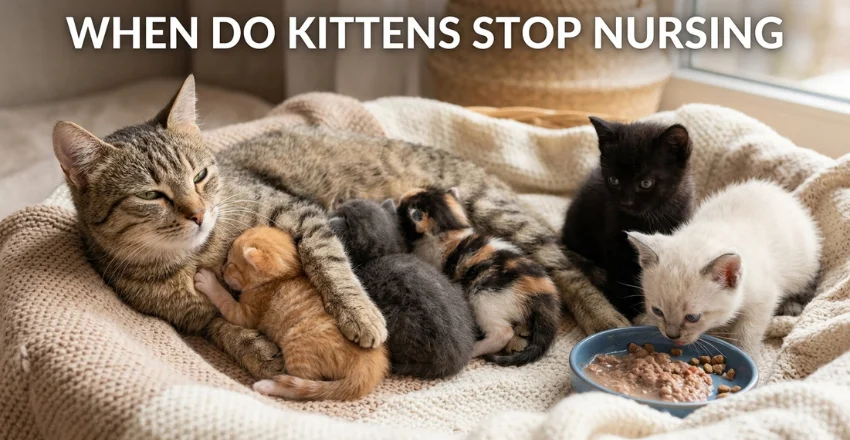
If you are caring for a new litter, knowing when do kittens stop nursing can help you avoid ending milk feedings too early or keeping kittens dependent on them longer than necessary. Weaning is a gradual transition, not something that happens on one particular day, and healthy kittens develop at slightly different speeds. Most begin experimenting with solid food at about three to four weeks and become fully weaned during the following several weeks.
Short answer: Kittens usually begin weaning from their mother at about 3–4 weeks old and are fully eating kitten food by roughly 7–10 weeks. Most stop regular nursing around 6–8 weeks, although occasional comfort nursing may continue longer if they stay with their mother and otherwise eat and grow normally.
Kitten Nursing and Weaning Timeline at a Glance
| Kitten age | Typical feeding stage | What caregivers should expect |
|---|---|---|
| Birth to 3 weeks | Mother’s milk or kitten milk replacer | Milk provides virtually all nutrition |
| 3–4 weeks | Weaning can begin | Kittens become mobile, develop teeth, and may investigate soft food |
| 4–5 weeks | Milk plus soft kitten food | Offer wet kitten food mixed with warm water or kitten formula |
| 5–6 weeks | Mostly kitten food | Nursing becomes less frequent as solid-food intake increases |
| 6–8 weeks | Final stage of weaning | Many kittens stop regular nursing and eat independently |
| 8–10 weeks | Fully weaned | Healthy kittens should be able to meet their nutritional needs with complete kitten food |
PetMD says kittens are often ready to start weaning around four weeks, while Purina places the usual starting point between three and four weeks. A 2026 PetMD kitten-development guide notes that most kittens are fully weaned by around seven weeks, although other veterinary-reviewed guidance allows for normal variation into the eight-to-ten-week range. The important point is to follow the kitten’s development rather than treating one birthday as a strict deadline.
Key Takeaways
Weaning normally starts around 3–4 weeks, not at eight weeks.
Most kittens stop relying on nursing between 6 and 8 weeks.
Some healthy kittens continue occasional comfort nursing beyond eight weeks.
Introduce a complete and balanced kitten food, not adult cat food.
Never replace mother’s milk or kitten formula with regular cow’s milk.
A kitten that is losing weight, refusing food, vomiting, having diarrhea, or acting weak needs veterinary attention.
Abruptly stopping an entire litter from nursing can also cause problems for the mother cat.
What Does Weaning Actually Mean?
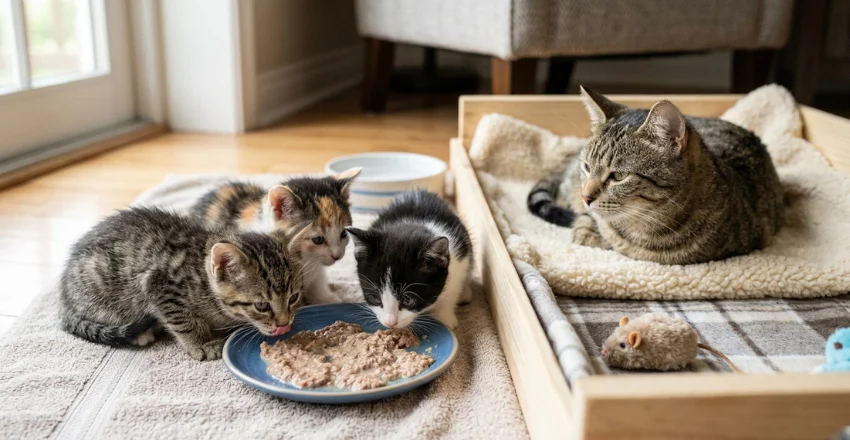
Weaning is the gradual change from receiving nutrition through a mother’s milk or kitten milk replacer to eating nutritionally complete solid kitten food. It begins before nursing completely ends, which is why a four- or five-week-old kitten may eat from a dish and still return to its mother afterward. This overlap is normal and gives the digestive system and feeding behavior time to adjust.
The mother cat, or queen, usually helps control this transition when she is present. As her kittens become more active and interested in food, she may spend more time away from them, allow shorter nursing sessions, or simply get up when they attempt to feed. Purina notes that kittens should still stay with their mother as much as possible during this natural transition because she provides social learning in addition to milk.
When Do Kittens Stop Nursing Completely?
For many kittens, regular nursing ends somewhere between six and eight weeks of age. Veterinary-reviewed guidance from Adopt a Pet places the common stopping point in that range and notes that some kittens may nurse somewhat longer when they continue living with their mother. By about eight to ten weeks, however, a healthy kitten should normally be able to meet its nutritional needs without nursing.
Continuing to approach the mother after that age does not necessarily mean the kitten still needs her milk. Some older kittens suckle because the behavior is comforting, much like kneading a soft blanket, even when they are already eating enough solid food. What matters more is whether the kitten is eating an appropriate diet, drinking, gaining weight, and developing normally.
Signs a Kitten Is Ready to Start Weaning
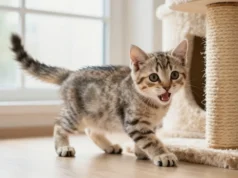
Age is useful, but physical and behavioral development provides better evidence that a kitten is ready for its first solid meals. Around three to five weeks, kittens become noticeably more mobile, curious, playful, and able to investigate their surroundings. Their baby teeth are also developing, making it easier for them to handle soft food. If this is your first litter, our other cat and pet care guides cover the surrounding basics, from feeding routines to early veterinary visits.
Common signs include the following.
Walking and exploring confidently.
Baby incisors and canine teeth becoming visible.
Showing interest in the mother cat’s food.
Licking food from a finger, spoon, or shallow plate.
Being able to lap liquids from a dish.
Nursing for shorter periods.
Remaining active and steadily gaining weight.
Do not force solid food simply because a kitten reaches four weeks old. A smaller or slower-developing kitten may need additional milk while learning to eat, and PetMD recommends supplemental formula when a kitten is not consuming enough kitten food or gaining weight consistently. Weaning can move more slowly when necessary without turning the transition into a race.
How to Wean Nursing Kittens Safely
A gradual approach is easier on both the kittens and their mother. The goal isn’t to make kittens stop nursing immediately, but to give them another reliable source of nutrition and let solid food gradually replace milk. Most kittens become comfortable with the new routine over a period of several weeks.
1. Start With Food Made for Growing Kittens
Choose wet or dry food formulated specifically for kittens rather than regular adult cat food. Growing kittens require a diet designed for development, and PetMD recommends choosing a complete and balanced product appropriate for growth under U.S. pet-food nutritional standards. VCA similarly advises feeding specially formulated kitten food through the growth period rather than substituting adult or dog food.
2. Make the First Meals Soft
For the first meals, mix a small amount of canned kitten food with warm water or commercial kitten milk replacer to create a soft mixture that is easy to lap. Offer it from a shallow dish, spoon, or clean fingertip, and let the kitten explore it without pushing its face into the food. As the kitten begins eating confidently, gradually use less liquid until normal wet food remains.
3. Introduce Texture Gradually
Dry kitten food can be introduced after kittens have begun managing softer meals, often around five to six weeks. If needed, moisten the kibble first, then gradually reduce the added liquid as chewing improves. PetMD recommends completing this transition by about eight weeks for most kittens, although timing can vary.
4. Keep Fresh Water Available
Kittens can begin showing interest in water around four weeks as they transition away from an all-milk diet. Use a stable, shallow bowl that small kittens can reach without climbing into it. Keep the water clean and available even if kittens initially obtain much of their moisture from wet food.
5. Let Nursing Decrease Gradually
When the mother is healthy and caring for the litter normally, she can usually help decide how quickly nursing decreases. Short periods away from the mother around mealtimes can encourage kittens to try their own food, but suddenly separating them solely to stop nursing is unnecessary in most normal litters. A gradual reduction also helps prevent an abrupt buildup of milk in the mother’s mammary glands.
Do Not Give Kittens Cow’s Milk
Regular cow’s milk is not an appropriate substitute for either a mother cat’s milk or commercial kitten milk replacer. VCA explains that cow’s milk contains substantially different amounts of protein, fat, calories, lactose, taurine, and minerals from feline milk, making commercial kitten milk replacer the better choice for orphaned kittens. PetMD also warns that cow’s milk and other dairy products can contribute to gastrointestinal upset during weaning.
If a very young kitten cannot nurse from its mother, use a commercial product specifically labeled as kitten milk replacer and follow its preparation instructions carefully. Neonatal kittens have small nutritional margins, so incorrect dilution, overfeeding, inappropriate formula, or poor feeding technique can quickly create problems. A veterinarian or experienced kitten foster program can provide guidance when you are caring for an orphan younger than normal weaning age.
What About Orphaned or Bottle-Fed Kittens?
The same basic developmental schedule applies to kittens being raised without a mother, although the caregiver has to manage every part of the transition. Maddie’s Fund recommends beginning the change from formula to solid food at roughly three to four weeks, while VCA states that kitten milk replacer should remain the sole nutritional source until about that age. Start slowly because suddenly changing a young kitten’s diet can contribute to digestive upset.
Begin with kitten food softened with formula or warm water, then make the mixture progressively thicker as the kitten learns to lap and chew. Continue monitoring how much the kitten actually consumes rather than assuming that food missing from the bowl was eaten, because young kittens are talented at walking through their meals. If the kitten is not eating enough or is failing to gain weight, supplemental formula may still be necessary while you seek veterinary guidance.
Bottle feeding also requires careful technique because formula entering the lungs can cause aspiration pneumonia. VCA recommends feeding kittens in a horizontal, head-neutral position and controlling the nipple flow rather than squeezing liquid rapidly into the mouth. Weak kittens, kittens that cannot suckle, or kittens that repeatedly regurgitate formula should be evaluated by a veterinarian rather than force-fed at home.
Is It Normal for a Kitten to Nurse After 8 Weeks?
Occasional nursing after eight weeks can happen, particularly when kittens remain with a tolerant mother. A kitten that eats a nutritionally complete diet, drinks normally, plays, and gains weight may simply be using suckling as a comfort behavior rather than as a major source of calories. Some cats continue suckling on blankets and other soft materials even after kittenhood.
The situation deserves more attention when an older kitten still depends on nursing and refuses solid food. By eight to ten weeks, kittens should generally be capable of obtaining their nutrition from kitten food, so persistent food refusal, poor growth, diarrhea, lethargy, or other signs of illness are reasons to speak with a veterinarian. Continued nursing itself is less informative than the kitten’s overall nutrition and development.
Weaning and Leaving the Mother Are Not the Same Thing
A kitten becoming nutritionally independent does not mean the mother immediately becomes unimportant. During the same period, kittens learn social boundaries, grooming behavior, play skills, litter habits, and communication from their mother and littermates. That is why veterinary guidance cautions against completely removing kittens from their mother simply because they have started eating solid food.
Think of weaning as a feeding milestone rather than a signal that every other maternal interaction should end. A kitten can be fully capable of eating independently while still benefiting from normal social contact with its family. This distinction is especially useful for foster caregivers deciding whether a kitten is merely eating well or genuinely ready for the next stage of development.
Weaning is also when many families begin planning for a kitten’s arrival at home. Anyone considering a purebred kitten will find the numbers in our breakdown of Siamese cat prices in the US, from breeder fees to first-year care costs. Reading that alongside this guide makes it easier to follow a kitten from weaning through its first months in a new household.
When to Call a Veterinarian During Weaning
Healthy kittens should remain active and continue gaining weight while milk feedings decrease. Contact a veterinarian promptly if a kitten stops eating, repeatedly vomits, develops diarrhea, becomes unusually sleepy or weak, cries continuously, or stops gaining weight. PetMD and VCA both identify poor intake, gastrointestinal symptoms, lethargy, and failure to gain weight as reasons for veterinary evaluation.
Watch the mother cat as well as the kittens. Mastitis can occur when a mammary gland becomes inflamed or infected, and VCA notes that sudden weaning may contribute because milk is no longer being removed normally. Swollen, hot, red, painful, discolored glands, abnormal milk, fever, poor appetite, vomiting, or lethargy warrant veterinary attention.
Do not speed up weaning to compensate for a kitten that appears ill or underweight unless a veterinarian recommends it. Young kittens can deteriorate faster than adult cats because they have limited energy reserves and depend heavily on consistent nutrition. When development is not following the expected pattern, professional assessment is safer than simply changing the feeding schedule.
Frequently Asked Questions
When do kittens stop nursing from their mom?
Most kittens stop regular nursing between about six and eight weeks, although the transition begins earlier. Some continue occasional comfort nursing beyond this point when their mother allows it. By roughly eight to ten weeks, a healthy kitten should normally be able to meet its nutritional needs with appropriate kitten food.
Can a 4-week-old kitten stop drinking milk completely?
Four weeks is generally the beginning of weaning rather than the point when every kitten should suddenly stop milk. At this age, kittens can start experimenting with softened kitten food while nursing or formula feeding decreases gradually. A kitten that does not yet eat enough solid food may still need milk support while the transition continues.
What age do kittens start eating wet food?
Many kittens can begin trying wet kitten food at approximately three to five weeks of age. Start with a soft mixture and gradually reduce the added warm water or kitten formula as eating skills improve. Interest in food, developing teeth, mobility, and steady growth are useful signs that the kitten is ready.
Why is my 10-week-old kitten still trying to nurse?
At ten weeks, suckling may be a comfort behavior rather than evidence that the kitten needs milk for nutrition. Check that the kitten is willingly eating a complete kitten diet, drinking, maintaining normal activity, and growing appropriately. If the kitten refuses regular food or appears unwell, ask a veterinarian to look for a feeding or health problem.
Should I stop my kitten from nursing?
Usually there is no need to abruptly prevent a healthy young kitten from nursing while normal weaning is progressing. Provide suitable kitten food, encourage independent meals, and allow milk intake to decline gradually unless a veterinarian advises a different approach. Sudden changes may unnecessarily stress the litter and can also contribute to milk accumulation in the mother.
How long do kittens nurse if they are bottle-fed?
Bottle-fed kittens generally follow a development schedule similar to mother-raised kittens, with weaning beginning at about three to four weeks. Formula is progressively replaced by softened kitten food as the kitten eats reliably and gains weight. The exact day to stop the bottle depends more on adequate independent food intake than on reaching one specific age.
The Bottom Line
So, when do kittens stop nursing? Expect weaning to start around three to four weeks, with regular nursing declining over the next several weeks, and most healthy kittens becoming nutritionally independent by roughly seven to ten weeks. Give kittens time to transition, use food designed for growth, monitor their weight and behavior, and involve a veterinarian if eating or development does not look normal.
This guide provides general educational information about kitten development and feeding and is not a substitute for veterinary care. Very young, orphaned, underweight, or sick kittens may require a feeding plan tailored to their condition. Contact a licensed veterinarian if you are concerned about a kitten’s growth, hydration, digestion, nursing behavior, or ability to eat independently.