
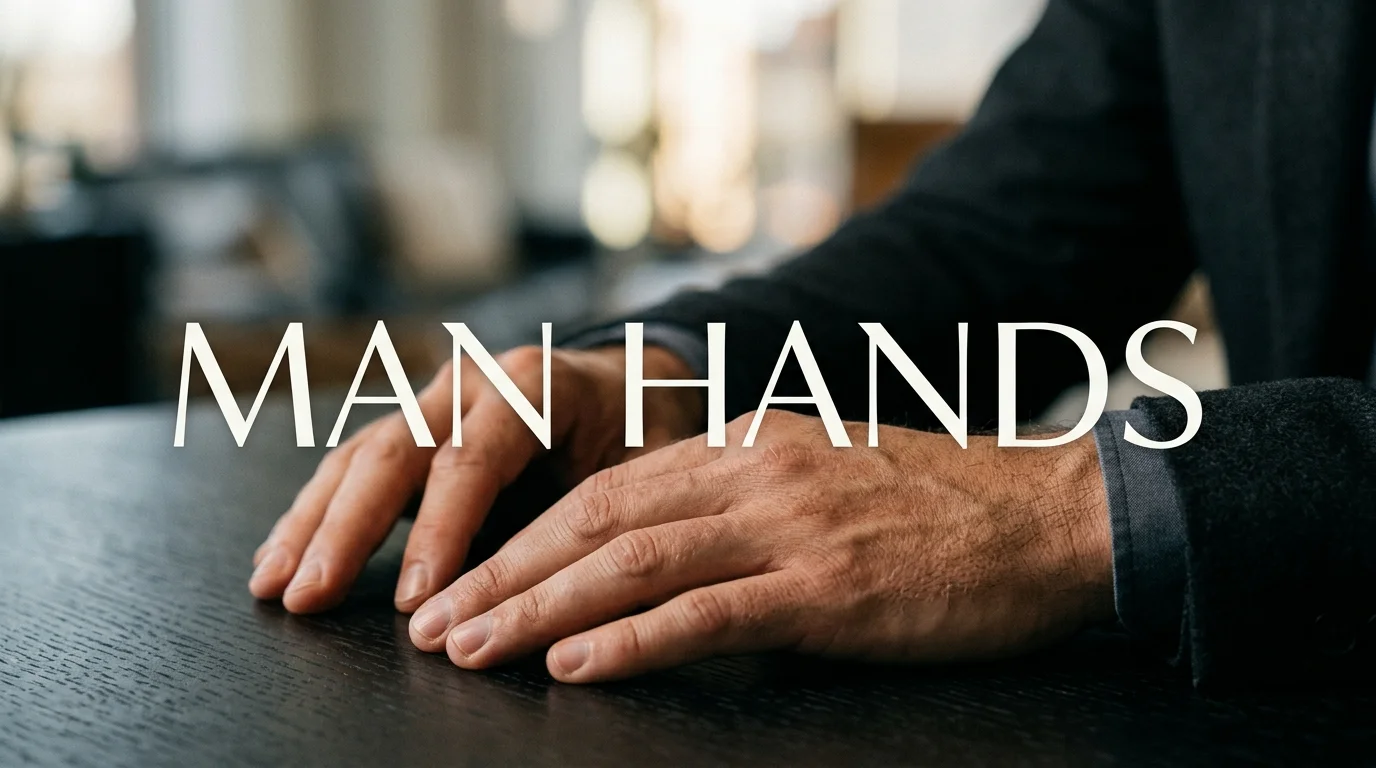
The phrase man hands usually describes hands that look unusually large, strong, rough, or masculine. The television sitcom Seinfeld helped make it widely recognized. Today, people also use the expression casually, like other texting slang, to describe hand size, appearance, or strength. The term is informal, not a medical description. Hand size and shape naturally vary between people regardless of gender. Larger hands do not indicate that anything is wrong.
| Quick fact | Details |
|---|---|
| Meaning | Large, strong, broad, or masculine-looking hands |
| Famous origin | Seinfeld, “The Bizarro Jerry” |
| Episode air date | October 3, 1996 |
| Character involved | Gillian |
| Usage | Informal slang and pop-culture reference |
| Medical term? | No |
| Usually hyphenated? | Both “man hands” and “man-hands” appear |
Direct answer: It is an informal phrase for hands that appear large, broad, strong, or traditionally masculine. The expression became famous through a 1996 Seinfeld episode. It remains a recognizable pop-culture phrase, although hand size and appearance naturally differ between individuals and do not follow one fixed gender standard.
What Does Man Hands Mean?
In everyday slang, man hands refers to hands someone perceives as having traditionally masculine features. Those features might include broad palms, thick fingers, prominent knuckles, or a strong-looking grip. The description is subjective rather than scientific.
The expression is most often associated with describing a woman’s hands as unusually masculine. That usage reflects cultural expectations about how men’s and women’s hands supposedly look. Real human hands show much more variation than those stereotypes suggest. Context also changes the meaning. Friends might use the phrase jokingly about someone who can open a stubborn jar. Someone else might use it simply to describe especially large hands.
Where Did the Phrase Come From?
The modern pop-culture meaning is strongly connected with Seinfeld. The phrase appears prominently in “The Bizarro Jerry,” an episode from the show’s eighth season. The episode originally aired in the United States on October 3, 1996.
Jerry dates Gillian, played by Kristin Bauer van Straten. He finds her attractive but becomes fixated on her unusually large-looking hands. He describes them as the hands of a man. The joke becomes a recurring part of Gillian’s storyline. Close-up shots exaggerate the contrast between her appearance and the hands shown onscreen. The episode helped turn the phrase into a recognizable piece of Seinfeld vocabulary.
The Seinfeld Man Hands Joke Explained
The humor depends on Jerry becoming obsessed with a minor physical characteristic. Gillian otherwise fits what he considers an attractive date. Her hands become the tiny detail he cannot stop noticing. The episode exaggerates those hands for comic effect. They tear bread forcefully, handle objects confidently, and appear much larger in close-up shots. This exaggeration makes Jerry’s fixation increasingly absurd.
A male stand-in supplied the hands used for the close-up shots. Kristin Bauer van Straten’s own hands were generally kept away from those specific close-ups. That production trick explains the visual contrast. The joke also fits a familiar Seinfeld pattern. Characters often reject relationships because of small habits, appearances, or personal quirks. The hands become another intentionally trivial dating problem.
Are Man Hands Really Different From Women’s Hands?

No single hand shape belongs exclusively to men or women. Genetics, height, body size, bone structure, age, occupation, and activity can affect appearance. Two people of the same sex can therefore have noticeably different hands. Average anatomical differences can exist across large populations. Those averages cannot reliably define one person’s gender from their hands alone. Individual variation remains substantial.
Work and hobbies can change appearance too. Weight training, climbing, construction work, gardening, sports, and manual labor can produce calluses or stronger-looking hands. Skin care and environmental exposure can also affect texture. For that reason, describing someone as having masculine hands is mainly a cultural judgment. It is not a diagnosis or formal anatomical category. Large hands are simply one part of normal physical variation.
Common Features People Associate With Masculine Hands
People usually have several visual characteristics in mind when using this expression. These traits are not exclusive to men. They simply explain what the slang commonly implies.
- Broad palms
- Thick or long fingers
- Large knuckles
- Visible veins
- Rough or callused skin
- Strong grip
- Wider wrists
- Larger overall hand proportions
None of these features automatically make a hand masculine. A woman can naturally have broad palms or long fingers. A man can equally have narrow, smooth, or smaller hands.
Perception also depends on the person’s overall proportions. The same hand size may look large on a shorter person and proportional on someone taller. Photos can further exaggerate size through camera angle and perspective.
Why Hand Size Varies So Much
Genetics strongly influences skeletal proportions. Parents with larger frames may have children with similarly large hands. Height and overall body dimensions can also influence hand measurements.
Daily activities can change how hands look without changing their underlying bone size. Repeated gripping may build forearm and hand strength. Physical work can also thicken skin and create noticeable calluses. Age introduces additional differences. Over time, skin texture, veins, joints, and muscle definition can become more visible. These changes can make someone’s hands appear larger or more rugged.
This variation explains why simple labels can be misleading. Human anatomy does not fit neatly into television stereotypes. Hands can differ significantly yet still be completely ordinary.
Is “Man Hands” an Insult?
The answer depends heavily on context and intention. Among friends, the expression may be playful and harmless, like the banter in funny replies people trade. Directed at someone’s appearance without invitation, it can feel insulting or embarrassing.
The original Seinfeld joke deliberately treats large feminine hands as an exaggerated dating flaw. Modern audiences may interpret that premise differently. Appearance-based humor can land differently when aimed at a real person. A safer approach is to describe the feature directly when you need to. Terms such as “large hands,” “broad palms,” or “strong hands” are clearer. They also avoid assuming femininity or masculinity.
Tone matters as much as vocabulary. Someone may proudly describe their own hands using the phrase. That doesn’t mean another person will appreciate the same label.
The Phrase Beyond Seinfeld
The expression survived because Seinfeld produced many memorable phrases that entered casual conversation. “Double-dipping,” “close talker,” and other show-related expressions became recognizable beyond individual episodes. The phrase became part of that broader television vocabulary.
Online slang references still connect the expression with large or traditionally unfeminine-looking hands. Entertainment articles also continue referencing the Gillian storyline decades later. That longevity shows how strongly the episode shaped the modern meaning. The phrase sometimes appears today without any television connection. Someone might describe their own hands while discussing gloves, rings, nail styles, or hand size. Others use it as a humorous shorthand for grip strength or broad fingers.
Search context therefore matters. Someone looking up the expression may want its definition, while another person may remember the television scene. Understanding both meanings provides the clearest answer.
Hand Size, Rings, Gloves, and Everyday Fit
Large hands can affect practical purchases more than people expect. Gloves may feel tight across the palm even when finger length seems correct. Measuring the hand before ordering can reduce sizing problems. Ring sizing presents another challenge because finger circumference varies independently from hand size. A person with broad hands does not automatically need an unusually large ring. Professional sizing is more accurate than guessing from appearance.
Tools, sports equipment, keyboards, and game controllers can also feel different depending on hand proportions. Comfort often depends on grip width and finger reach. Choosing products by measurements is more useful than relying on gender labels. These practical differences are neutral physical characteristics. They do not determine attractiveness or femininity. They simply affect how certain products fit and feel.
What the Phrase Tells Us About Gender Stereotypes
The joke works because audiences recognize stereotypes about masculine and feminine appearance. Men are traditionally portrayed with larger, rougher, stronger hands. Women are often portrayed with smaller, smoother, more delicate hands. Real people rarely fit every part of those visual conventions. A person’s height, genetics, work, sports, and personal care can all affect their hands. Those factors make rigid appearance rules unreliable.
Advertising and entertainment have reinforced these visual expectations for decades. Television can exaggerate them further because physical contrasts create easy visual comedy. The Seinfeld episode intentionally pushes that contrast to an unrealistic level. Recognizing the stereotype makes the joke easier to understand without treating it as an anatomical rule. The phrase is primarily slang and part of popular culture. It should not be mistaken for a meaningful biological classification.
Frequently Asked Questions
What does man hands mean in slang?
This phrase usually means hands perceived as large, broad, rough, strong, or masculine. The expression often describes a woman whose hands do not match traditional ideas of delicate feminine hands. It remains informal slang, not an anatomical term.
What Seinfeld episode has the famous hands joke?
The storyline appears in “The Bizarro Jerry.” It is the third episode of Seinfeld season eight and originally aired in October 1996. Gillian’s exaggerated hands become one of Jerry’s dating concerns.
Were the hands in Seinfeld real?
The oversized hands shown in close-ups didn’t belong to Kristin Bauer van Straten. Production used a male stand-in for those shots. This deliberate substitution created the exaggerated visual joke.
Can women naturally have large hands?
Yes, hand size varies naturally among women and men. Genetics, height, skeletal structure, and other factors influence hand proportions. Large hands alone are not unusual or medically significant.
Is having masculine-looking hands bad?
No, appearance alone does not make someone’s hands unhealthy or abnormal. Broad palms, long fingers, visible veins, and strong knuckles can all occur naturally. Concerns about sudden swelling, pain, or joint changes are separate health matters.
Is it rude to tell someone they have man hands?
It can be rude when the comment is unsolicited or targets someone’s appearance. Some people may use the expression jokingly about themselves or with close friends. Describing hands as large, broad, or strong is usually more neutral.
The Bottom Line
The phrase gained its most famous life as a memorable Seinfeld joke and has remained part of American pop culture. It describes hands perceived as unusually large, broad, strong, or masculine. The expression is slang, not a scientific classification.
Real hand shapes vary widely across every gender. Genetics, body proportions, work, sports, and age all contribute to those differences. No single combination of features defines what men’s or women’s hands must look like.
If you encounter the phrase online, context will tell you what it means. It may reference Seinfeld, describe someone’s appearance, or simply joke about unusually strong hands. Knowing its television origin explains why two ordinary words became such a recognizable expression.