


There is no production car officially called the “Electric Hellcat.” The term is what many enthusiasts use for Dodge’s electric muscle car, the Dodge Charger Daytona EV, which arrived after the supercharged Hellcat Charger and Challenger ended production in late 2023. Its top Scat Pack version produces up to 670 horsepower and reaches 60 mph in about 3.3 seconds, according to Dodge.
Dodge has also shown a more extreme 800-volt “Banshee” powertrain on its concept car, which executives said was meant to beat Hellcat performance. Below is what the electric Hellcat idea really refers to, how the car performs, how it compares to the gas Hellcat, and what buyers should check before choosing one.
Electric Hellcat at a Glance
| Item | Details |
|---|---|
| What people mean | Dodge Charger Daytona EV, the electric successor to the Hellcat-era Charger and Challenger |
| Body styles | Two-door coupe first, four-door model added later |
| Trims | R/T and Scat Pack (electric); Sixpack gas models sold alongside |
| Peak power (Scat Pack) | Up to 670 hp with the PowerShot boost |
| 0–60 mph (Scat Pack) | About 3.3 seconds (Dodge figure) |
| Drivetrain | Dual-motor all-wheel drive |
| Battery | About 100 kWh pack on a 400-volt system |
| Range | Roughly 240 miles (Scat Pack) to about 300 miles (R/T), depending on trim and model year |
| Signature features | Fratzonic Chambered Exhaust sound system, launch control, drift and track modes |
| Built in | Windsor, Ontario, Canada |
Why Dodge Built an Electric Muscle Car
The gas Hellcat models, powered by a 707-hp supercharged 6.2-liter V8 in standard form, defined Dodge for nearly a decade. Tightening emissions rules and the shift to electrification led Dodge to end Charger and Challenger production at its Brampton, Ontario, plant in December 2023 with a run of “Last Call” special editions.
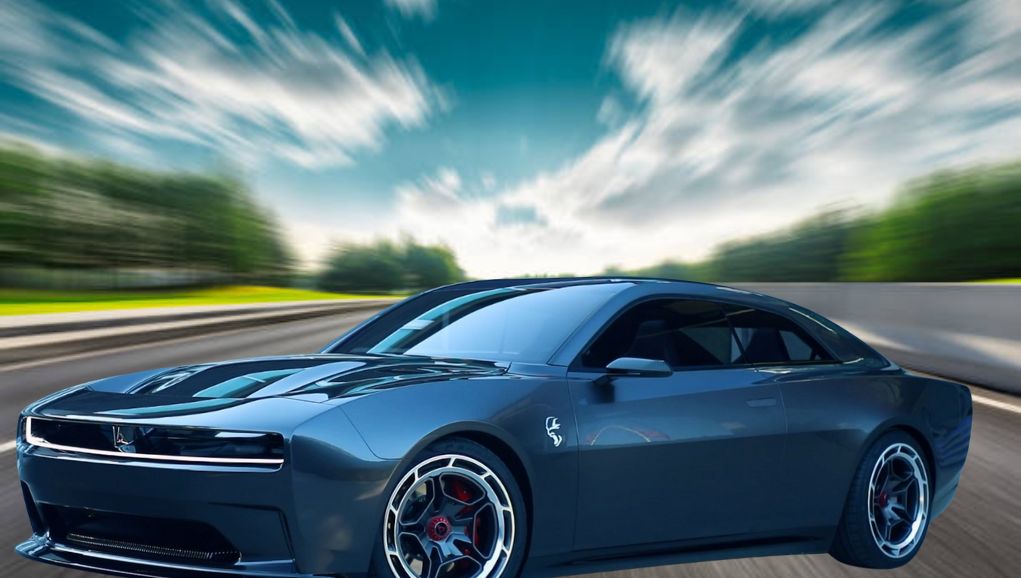
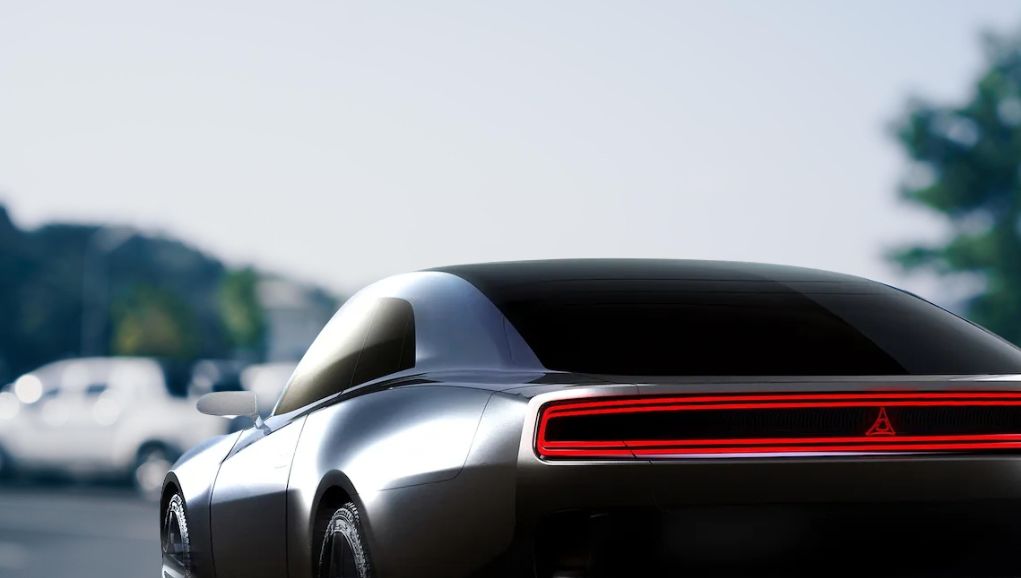
Dodge previewed its electric future with the Charger Daytona SRT Concept in 2022. Then-CEO Tim Kuniskis said the concept’s 800-volt Banshee system would be quicker than a Hellcat in key performance measures, which is where the “electric Hellcat” nickname took hold. Design was led by Dodge’s head of design, Mark Trostle, who kept the long hood, wide stance and fastback shape of classic Chargers.
Design: Muscle Car Looks, Modern Aerodynamics
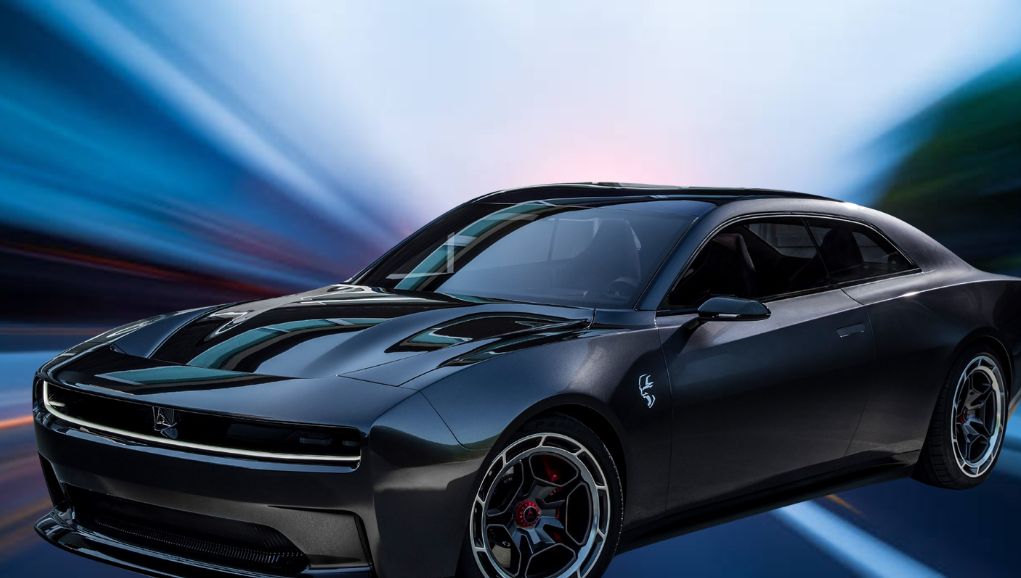
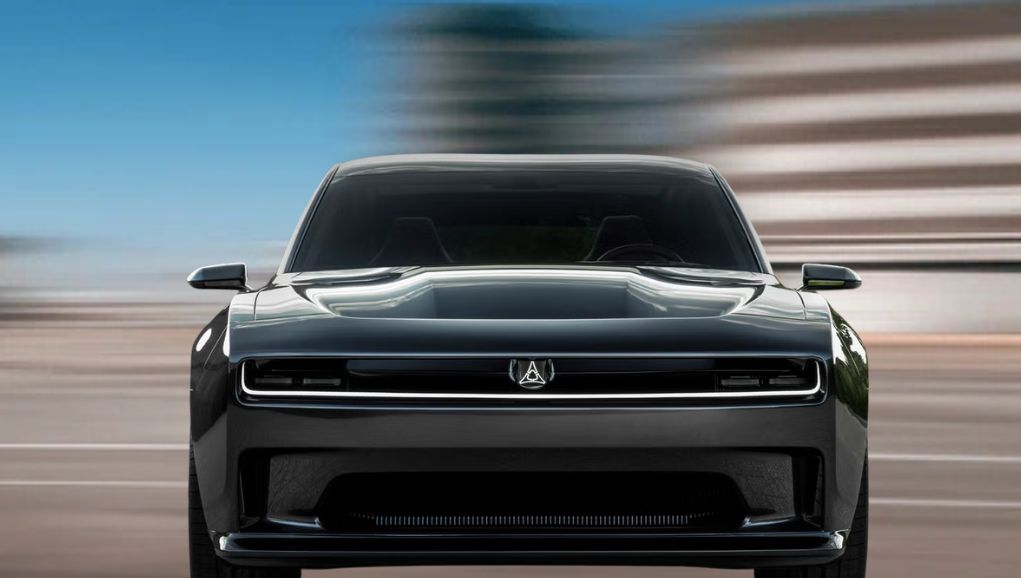
The production Charger Daytona keeps the boxy, aggressive proportions buyers expect, with a light bar across the nose and full-width rear lights. Its most unusual design detail is the “R-Wing,” a pass-through opening at the front that channels air over the hood to cut drag and add downforce. It looks like a nod to the winged Charger Daytona of 1969, while doing a job that matters for an EV, where aerodynamics affect range.
Inside, a driver-focused cockpit uses large digital screens, a flat-bottom steering wheel and pistol-grip-style shifter. Performance pages show power use, G-forces and timing data, which is popular with owners who take the car to drag strips or track days.
Battery and Powertrain
Both electric trims use a dual-motor all-wheel-drive layout. The battery is roughly 100 kWh and runs on a 400-volt architecture. Dodge’s PowerShot feature temporarily adds extra power for about 15 seconds, useful for passing or launching off the line.
| Trim | Power | 0–60 mph | Who it suits |
|---|---|---|---|
| R/T | Around 456 hp, up to about 496 hp with PowerShot | Around 4.7 seconds | Daily drivers who want longer range |
| Scat Pack | Around 630 hp, up to about 670 hp with PowerShot | About 3.3 seconds | Buyers chasing Hellcat-like acceleration |
Figures come from Dodge’s launch announcements and can differ slightly by model year, so confirm the current specs with a dealer before buying.
Note that Dodge postponed production of the electric Charger Daytona R/T for the 2026 model year, citing slow sales and tariff uncertainty, so the Scat Pack (in two-door and four-door form) is the only electric Charger Daytona on sale new for 2026. R/T models remain available on the used market.
Electric Hellcat vs Gas Hellcat
| Feature | Charger Daytona Scat Pack (EV) | Challenger/Charger SRT Hellcat (gas) |
|---|---|---|
| Power | Up to 670 hp | 717 hp in later Challenger Hellcat; 707 hp in earlier versions |
| Drive | All-wheel drive | Rear-wheel drive (some widebody/Jailbreak variants differ) |
| Launches | Instant torque and AWD grip | Wheelspin-prone without careful throttle control |
| Sound | Synthetic Fratzonic exhaust sound | Supercharged V8 with whine and rumble |
| Running costs | Lower fuel cost if charged at home | High fuel use and premium gas |
| Weight | Heavier because of the battery | Lighter overall |
| Availability | Sold new | Used market only after 2023 |
The EV wins on launches and everyday running costs, while the gas Hellcat still wins on sound, character and lighter weight. Many collectors see the last Hellcats as future classics, which has kept used prices firm.
Technology and Infotainment
The car runs Stellantis’s Uconnect 5 system with wireless Apple CarPlay and Android Auto, connected navigation and over-the-air software updates. The Fratzonic Chambered Exhaust uses a tuned chamber and amplifier at the rear to produce a loud, engine-like sound that rises with speed and power, Dodge’s answer to the silence of most EVs.
Performance and Handling
Driver modes include Auto, Sport, Track, Drag and Wet/Snow on performance trims, with launch control, Line Lock for burnouts and a drift mode that sends more power to the rear. The low-mounted battery lowers the center of gravity, helping the car feel planted in fast corners despite its weight. Brembo brakes and performance tire packages are offered on higher trims.
Charging and Range
- Home charging: A Level 2 (240-volt) charger is the practical choice for owners and can refill the battery overnight.
- DC fast charging: Public fast chargers add a large amount of range in roughly half an hour, though actual speed depends on the charger and battery temperature.
- Real-world range: Aggressive driving, cold weather and track use cut range noticeably. Plan on less than the official figure if you drive hard.
- Road trips: Check charger coverage on your usual routes before buying, especially in rural areas.
Safety Features
Driver-assistance features include automatic emergency braking, blind-spot monitoring, rear cross-path detection, adaptive cruise control and lane-keeping assistance, with availability depending on trim and package. A surround-view camera is offered as an option. Check crash-test results from NHTSA and IIHS for the specific model year before buying.
Market, Price and Competitors
The Charger Daytona is priced well below luxury electric sedans, and Dodge has adjusted trims and pricing across model years, so check current Dodge pricing and local incentives rather than relying on launch figures. Its natural rivals are the Ford Mustang Mach-E GT, which brings the Mustang name to an electric crossover, and high-performance EVs such as the Tesla Model 3 Performance and Kia EV6 GT. None of these offers the same two-door muscle car shape, which remains the Charger’s main selling point.
Warranty and Ownership Tips
Dodge covers EV batteries with a longer warranty than the rest of the car, typically 8 years/100,000 miles for the high-voltage battery, in line with industry norms. Confirm the exact terms with your dealer. Before buying, consider:
- Whether you can install a Level 2 charger at home.
- Your insurance quote, since high-power cars cost more to insure.
- Tire costs, because instant torque and heavy weight wear tires faster.
- Which dealers near you are certified to service EV powertrains.
- Available federal or state incentives, which change often.
Future Prospects
Dodge has said the higher-performance SRT Banshee version shown on the concept remains part of its plans, though timing has shifted, and it has also kept gas-powered Sixpack models in the lineup in response to buyer demand. Watch for official announcements rather than rumored horsepower figures.
Bottom Line on the Electric Hellcat
The “electric Hellcat” is really the Dodge Charger Daytona EV, with the Scat Pack trim delivering Hellcat-rivaling acceleration through all-wheel drive and instant torque. It trades the V8’s sound and lighter weight for lower running costs and easier launches. If you can charge at home and value straight-line speed, it is a credible modern muscle car; if engine noise is the point, a used gas Hellcat may still suit you better.
More from our site: Can you answer my question and What Is a Suspended Sentence. For more car coverage, visit our Automobile category.
FAQs
Is there an electric Dodge Hellcat?
Not by that name. The electric car people call the electric Hellcat is the Dodge Charger Daytona EV, which replaced the Hellcat-era Charger and Challenger after gas production ended in 2023.
How fast is the electric Charger Daytona?
Dodge rates the Scat Pack at about 3.3 seconds from 0 to 60 mph with up to 670 horsepower using PowerShot. The R/T is slower, at around 4.7 seconds.
What is the range of the electric Hellcat?
Range depends on trim and model year, roughly 240 miles for the Scat Pack and about 300 miles for the R/T. Hard driving and cold weather reduce it.
Is the electric Charger faster than a Hellcat?
In 0–60 mph sprints, the Scat Pack is comparable to or quicker than many gas Hellcats thanks to all-wheel drive. The gas Hellcat has more peak horsepower and less weight.
What is the Dodge Banshee?
Banshee is the name of the 800-volt electric powertrain Dodge showed on its 2022 Charger Daytona SRT Concept. Dodge said it would outperform a Hellcat, but production timing has not been confirmed.
Does the electric Charger make engine sounds?
Yes. The Fratzonic Chambered Exhaust produces a loud, engine-like sound that changes with speed and power, designed to give the EV a muscle car feel.


