

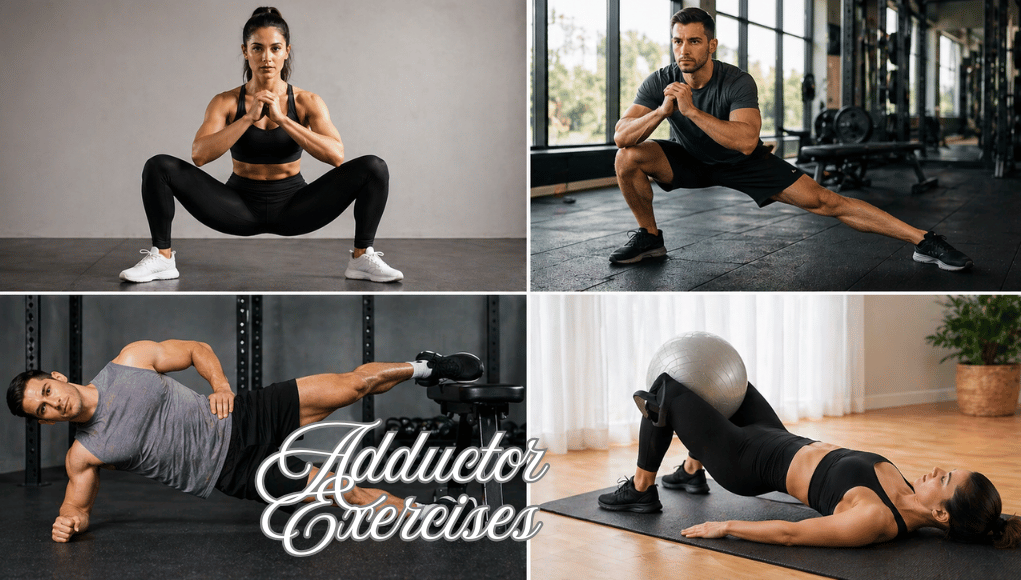
When it comes to building strong, powerful legs, most people immediately think of squats for quads or deadlifts for hamstrings, but there’s one crucial muscle group that often gets ignored: the inner thighs, known as the adductors. These hidden yet powerful muscles play a key role in keeping your hips stable, improving balance, and making every movement smoother and more efficient.
From walking and running to jumping and changing direction, your adductors are constantly at work. Strengthening them not only boosts athletic performance but also helps protect your body from strains and injuries, making them an essential part of any well-rounded fitness routine. This complete guide explores the best adductor exercises, their benefits, and how to include them in your routine for stronger, more balanced legs.
| Section | Key Points |
| Introduction | Adductors (inner thigh muscles) are often overlooked but essential for stability, balance, and injury prevention. |
| What is the adductor exercises? | Inner thigh muscles that bring the legs toward the body and support hip stability and movement. |
| Importance | Improve balance, posture, athletic performance, and hip stability, and reduce injury risk. |
| Best Exercises | Side-Lying Leg Raises, Sumo Squats, Adductor Machine, Copenhagen Plank, Lateral Lunges, and Resistance Band Adduction. |
| Workout Structure | Warm-up → Strength exercises → Controlled movements → Cool-down stretching. |
| Training Tips | Focus on form, start light, combine with full leg workouts, stretch regularly, and stay consistent. |
| Home vs Gym | Home: bodyweight & bands |
| Stretching | Helps flexibility, reduces tightness, and improves recovery. |
| Conclusion | Regular adductor training builds stronger, more stable, and injury-resistant lower body. |
What Are Adductor Muscles?
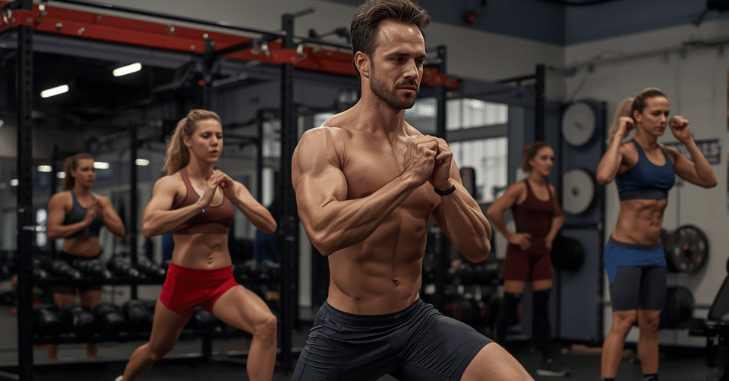
Adductor exercises are essential for strengthening these muscles, improving stability, and enhancing overall lower-body performance. Weak or tight adductors can lead to poor posture, reduced mobility, and a higher risk of groin injuries. That’s why incorporating regular adductor exercises and stretching into your routine is important not only for athletic performance but also for injury prevention and overall lower-body health.
Together, these muscles play an essential role in stabilizing the pelvis, supporting smooth hip movement, and assisting in everyday activities such as walking, running, and squatting, making them vital for both strength and balance in the lower body. These muscles also assist in controlling leg positioning, especially during lateral movements, sudden direction changes, and balance-based activities.
Why Are Adductor Exercises Important?
Training your adductors is essential for overall lower-body strength and stability. Weak inner thighs can lead to poor posture, reduced athletic performance, and a higher risk of injury.
Key Benefits
- Improves balance and coordination
- Enhances hip stability
- Supports proper posture
- Reduces the risk of groin injuries
- Boosts athletic performance
- Helps create balanced leg development
Adductor Exercises

Here are some of the most effective Adductor Exercises to target and strengthen your inner thigh muscles.
Side-Lying Leg Raises
Side-lying leg raises are a simple yet effective exercise that targets the inner thigh muscles without requiring any equipment. To perform this exercise, lie on your side with your legs extended, cross your top leg over the bottom leg, then slowly lift the bottom leg upward and lower it back down with control.
Sumo Squats
Sumo squats are excellent for engaging the inner thighs along with the glutes and quadriceps. Stand with your feet wider than shoulder-width apart and point your toes slightly outward. Lower your body into a squat position and push back up through your heels. This exercise strengthens the inner thighs and hips, improves lower body power, and enhances flexibility.
Adductor Machine
The adductor machine is specifically designed to target the inner thigh muscles in a controlled way. Sit on the machine with your legs positioned on the pads, then bring your legs together against resistance and slowly return to the starting position. This exercise isolates the adductor muscles, allows easy control of resistance, and is suitable for all fitness levels.
Copenhagen Plank
The Copenhagen plank is a more advanced exercise that challenges both strength and stability. To perform it, place one leg on a bench or elevated surface, support your body with your forearm, and keep your body in a straight line while holding the position. This exercise builds core and inner thigh strength, improves stability, and helps reduce the risk of injury.
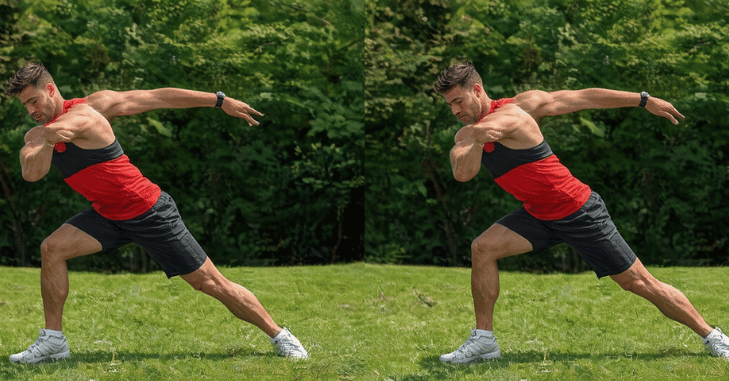
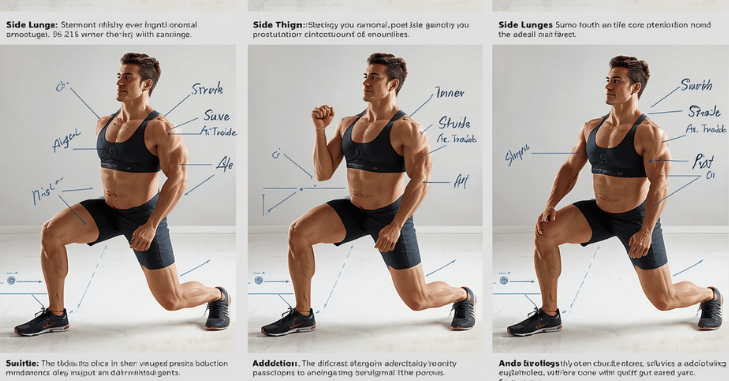
Lateral Lunges
Lateral lunges effectively target the inner thighs while also improving mobility. Step out to one side, bend the stepping leg while keeping the opposite leg straight, and then push back to the starting position. This movement enhances flexibility, improves control, and strengthens multiple muscle groups.
Resistance Band Adduction
Adductor Exercises like resistance band adduction, are controlled movements that use bands to strengthen the inner thighs. Attach a resistance band to a fixed object, wrap it around your ankle, and move your leg inward against the resistance. This exercise is great for home workouts, improves muscle control, and helps build strength gradually.
How to Structure an Adductor Workout
To get the best results, include Adductor Exercises in your weekly routine to build strength, stability, and flexibility in the inner thighs.
Warm-up
- Light cardio, such as brisk walking or cycling
- Dynamic movements like leg swings and hip circles
- Gradually increase heart rate to prepare muscles
Sumo Squats
- Wide stance to activate inner thigh muscles
- Lower hips slowly with controlled form
- Keep chest upright and core engaged
Lateral Lunges
- Step sideways into a deep lunge position
- Push your hips back while keeping your balance
- Focus on slow and controlled movement
Adductor Machine
- Sit properly and place your legs against the pads
- Squeeze inward using the inner thigh muscles
- Maintain steady resistance throughout
Copenhagen Plank
- Side plank variation targeting adductors
- Keep body straight and stable
- Engage the core for better balance and strength
Cool-down & Stretching
- Hold inner thigh stretches for 20–30 seconds
- Breathe slowly to relax muscles
- Improve flexibility and reduce soreness
Tips for Better Results
Focus on Proper Form
Maintaining correct form is essential to prevent injuries and ensure your Adductor Exercises effectively target the inner thigh muscles. Move slowly and stay controlled throughout each exercise.
Start with Light Resistance
Begin with lighter weights or resistance bands and gradually increase intensity over time. This helps your muscles adapt safely and build strength steadily.
Combine with Lower-Body Workouts
For balanced strength, include adductor training as part of a complete lower-body routine. Exercises like squats, lunges, and glute work enhance overall leg performance.
Stretch Regularly
Consistent stretching keeps your inner thighs flexible, reduces tightness, and supports faster recovery after workouts.
Stay Consistent
Regular practice is key to visible results. Stick to your routine and progressively challenge your muscles for continuous improvement.
Common Mistakes to Avoid
- Using too much weight too quickly
- Ignoring warm-up and stretching
- Performing exercises with poor form
- Neglecting rest and recovery
- Skipping inner thigh training altogether
Injury Prevention and Safety
Strong adductors help prevent injuries, especially in sports that involve quick direction changes.
Safety Tips
- Always warm up before exercise
- Avoid overtraining
- Listen to your body
- Use proper technique
- Include rest days in your schedule
Adductor Exercises at Home vs Gym
At home, you can focus on bodyweight movements and resistance band exercises, which require minimal or no equipment while still targeting the inner thighs. In contrast, gym workouts offer access to specialized machines like the adductor machine, along with weighted exercises and more advanced training options, allowing for higher resistance and progressive strength development.
Stretching for Adductors

Stretching is essential for flexibility and recovery.
Simple Stretch
- Sit with feet together
- Push your knees downward gently
- Hold for 20–30 seconds
Benefits
- Improves flexibility
- Reduces muscle tightness
- Enhances recovery
Conclusion
Adductor Exercises are an essential part of any balanced fitness routine, helping you build stronger inner thigh muscles, improve stability, enhance flexibility, and support overall lower body strength.
Whether performed at home or in the gym, these exercises play a key role in improving athletic performance and reducing the risk of injury. By consistently including Adductor Exercises in your workout plan with proper form and progression, you can achieve better movement control, healthier joints, and more stable, powerful legs for long-term fitness and mobility.
If you want to read an interesting article about it, explore our Fitness category.
FAQs
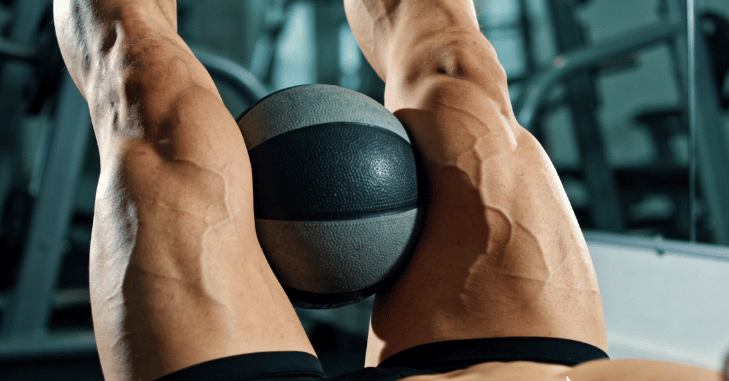
Put a magic circle, ball, or pillow between your knees. After five to ten seconds of gentle squeezing and holding, let go. Despite its simplicity, this exercise enhances awareness of the adductor muscles and aids in the restoration of neuromuscular control.
Every study that was included concluded that knee pain and functional outcomes were improved by strengthening the hip abductor muscle.
In addition to its numerous health advantages, walking works with a variety of muscles. The quadriceps, hamstrings, calf muscles, and hip adductors are the main muscles used when walking.
Hip and knee discomfort might result from these muscles not functioning properly.


