

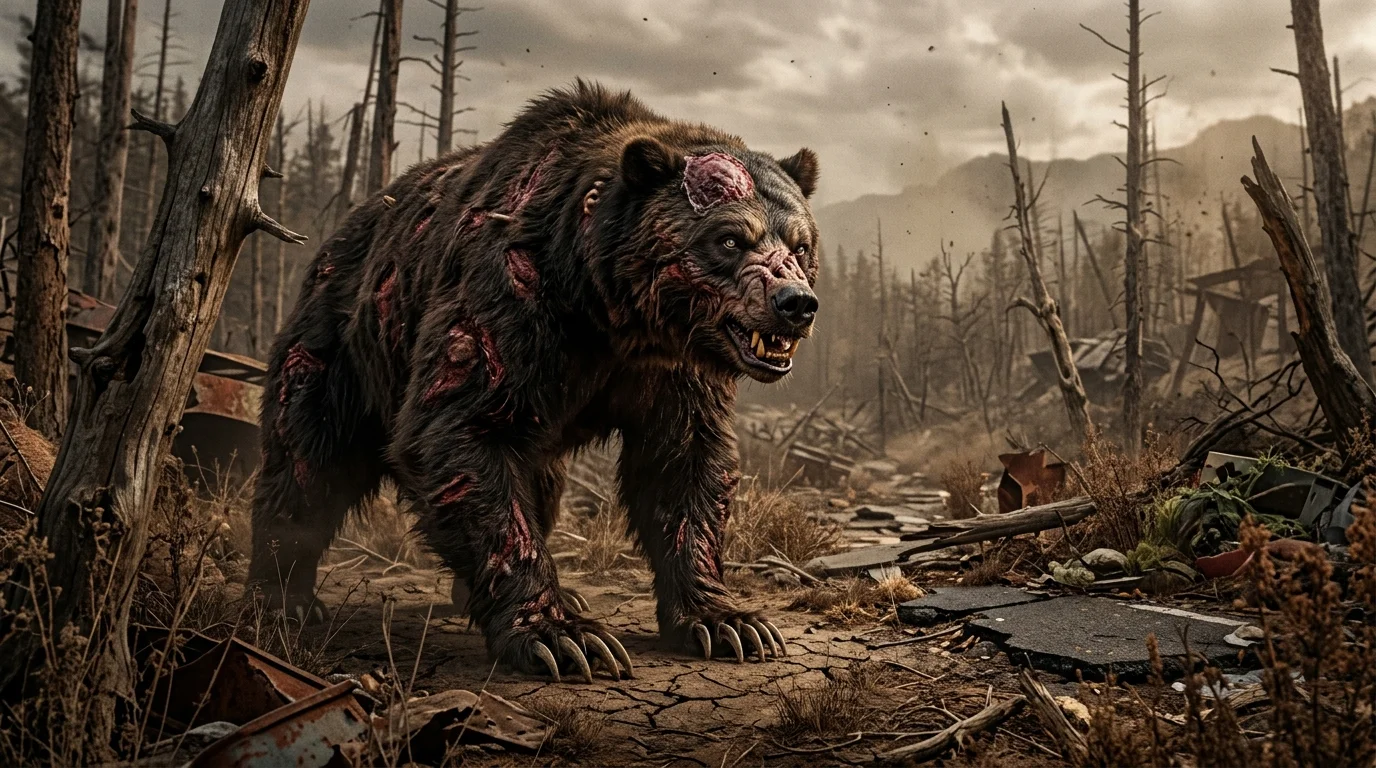
A Yao Guai is one of the most recognizable mutated animals in the Fallout universe. These aggressive creatures descended from bears that survived the nuclear devastation of the Great War. Their unusual name also connects Fallout’s American wasteland with a much older Chinese term for supernatural monsters.
The creature appears across several Fallout games and later reached television through Prime Video’s adaptation. Its scarred body, powerful limbs, and violent behavior make it a dangerous wasteland predator. Yet the meaning behind its name is almost as interesting as the monster itself.
Quick answer: In Fallout, the creature is a heavily mutated bear found throughout post-war America. Its name comes from the Chinese term yāo guài, commonly translated as “monster” or “demon.” Fallout lore connects the name with descendants of Chinese people held in pre-war American internment camps.
Key Facts at a Glance
| Fact | Details |
|---|---|
| Name | Yao Guai |
| Fallout creature type | Mutated bear |
| Pre-war ancestor | American bear species, commonly described as black bears |
| Known for | Strength, aggression, claws, speed, and territorial behavior |
| Major game appearances | Fallout 3, Fallout: New Vegas content, Fallout 4, Fallout 76 |
| TV appearance | Prime Video’s Fallout |
| Chinese spelling | 妖怪 |
| Mandarin pronunciation | Yāo guài |
| Common English meanings | Monster, demon, supernatural creature |
| Cultural origin | Chinese language, folklore, and supernatural traditions |
What Does Yao Guai Mean?
The Chinese characters are written as 妖怪, pronounced yāo guài in Mandarin. Chinese dictionaries commonly translate the combined term as “monster” or “devil.” Its historical meaning is broader than a single Western idea of a demon.
The first character, yāo, can describe something supernatural, strange, or bewitching. The second, guài, carries meanings connected with strangeness, unusual things, or monsters. Together, they describe supernatural beings that fall outside ordinary human experience.
China’s Ministry of Education dictionary describes 妖怪 as strange supernatural beings that can harm people. Older Chinese texts also use the expression for unusual beings and unexplained supernatural events. The term therefore existed for centuries before Fallout used it for irradiated bears.
English translations can sometimes hide that cultural complexity. A supernatural creature in Chinese tradition does not always match the Christian concept of a demon. The safest general translation is usually “monster,” “supernatural creature,” or “strange spirit.”
Why Does Fallout Use a Chinese Name for a Mutant Bear?
Fallout’s alternate history includes a major conflict between the United States and China before the Great War. That political background influenced many locations, characters, technologies, and stories throughout the franchise. The bear’s name fits into that larger fictional history.
Fallout lore connects the name with descendants of Chinese people held in American internment facilities before the nuclear war. Those descendants reportedly used the Chinese expression for the dangerous mutated animals they encountered. The name eventually became part of everyday wasteland vocabulary.
That explanation gives the creature more depth than a random monster label. A Chinese word survives even after governments, cities, and institutions disappear. Language becomes another piece of the old world that continues into the post-apocalyptic future.
The naming choice also works because the animal looks almost supernatural. Radiation and mutation have transformed a familiar American predator into something disturbing. Calling it a “monster” makes sense to survivors who encounter one without modern scientific context.
What Is the Creature in Fallout?
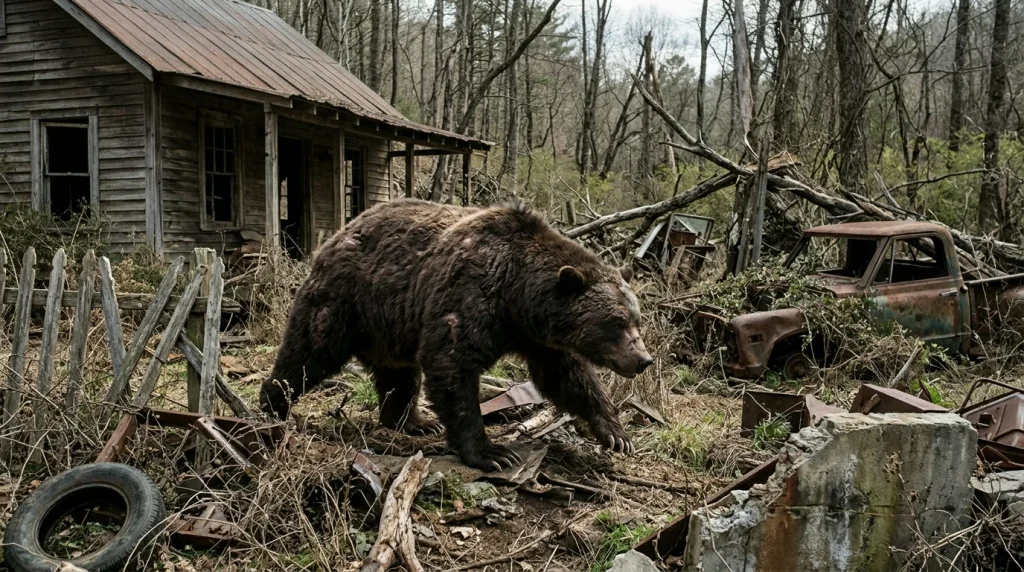
The Fallout version is a huge, badly mutated bear built for close-range combat. Most versions have damaged fur, exposed skin, scars, sores, and an unusually muscular frame. They remain recognizable as bears despite their extreme mutations.
Their behavior creates much of the danger. They can close distance quickly and attack with heavy swipes or powerful bites. Players who underestimate them can lose health rapidly during close combat.
They also tend to appear in wilderness areas, caves, abandoned locations, and other places away from major settlements. Exact spawning behavior changes between games. Fallout 76, for example, includes several locations where players regularly hunt these creatures.
These encounters can also provide useful resources. Players may seek them for meat, crafting materials, challenges, quests, or specific drops. That creates an interesting risk-and-reward decision during exploration.
Major Fallout Appearances
The mutant bear became widely recognizable after appearing in Fallout 3. Its presence suited the ruined forests and wilderness surrounding the Capital Wasteland. Later games expanded the creature’s variants, habitats, and combat roles.
Fallout: New Vegas also brought the animal into its wider world through additional content. Fallout 4 placed mutated versions around the Commonwealth. Fallout 76 then made them a recurring threat across post-apocalyptic Appalachia.
Different games introduce stronger or visually altered variants. Glowing and diseased forms can make an already dangerous encounter more difficult. Players therefore need to consider level, equipment, terrain, and available escape routes before attacking.
Readers interested in other gaming topics can also explore Newsloger’s guide to Nintendo Switch games for kids. It covers adventure, multiplayer, creative, and educational titles. That guide offers a lighter contrast to Fallout’s much harsher survival setting.
The Mutant Bear in the Fallout TV Series
Prime Video brought the creature into live action during the first season of Fallout. It appears during a violent encounter involving Brotherhood of Steel characters. The sequence quickly demonstrates how dangerous ordinary wasteland wildlife has become.
Visual-effects studio Framestore worked on creature effects for the television series. Its production material shows how artists developed a believable mutated bear for live-action scenes. The design preserves recognizable bear anatomy while adding wounds and post-nuclear physical damage.
The television adaptation also introduced Fallout’s creatures to viewers who had never played the games. Prime Video later renewed the series beyond its first season. That wider audience has increased interest in the franchise’s monsters, factions, technology, and history.
Fans who enjoy fictional character lore may also like Newsloger’s Rune King Thor explainer. That article examines another character shaped by mythology and modern entertainment. Both subjects show how older cultural ideas can influence contemporary fantasy stories.
Is the Fallout Creature the Same as a Chinese Mythological Monster?
No, the Fallout animal should not be treated as one specific monster from Chinese mythology. The game uses a broad Chinese category name for its mutated bear. Traditional Chinese stories contain many different supernatural beings that could fall under similar terminology.
Some supernatural beings appear as transformed animals, spirits, demons, or unusual creatures. Their motives can also vary considerably between stories. They are not all aggressive monsters that behave like Fallout’s irradiated wildlife.
This distinction matters because fictional adaptations often simplify cultural terminology. Fallout borrows the name rather than recreating a particular legendary creature. Its monster belongs to Fallout lore, while the word itself has a much older cultural history.
That pattern appears throughout modern entertainment. Writers often adapt mythology, folklore, and religious traditions into new fictional settings. The result can preserve a name while changing almost everything about the original concept.
Why the Name Works So Well in Fallout
The term works because Fallout constantly mixes American history with fragments from other cultures. Its world survived a global conflict, so languages and memories continued through scattered communities. A Chinese name becoming attached to an American animal fits that storytelling approach.
It also makes the creature more memorable than a generic label such as “mutated bear.” Players hear a strange name before fully understanding what caused it. Discovering its meaning later adds another layer to the fictional world.
The creature itself supports that name through its appearance. It still resembles an animal people recognize, yet its mutations make it look unnatural. That tension between familiar and monstrous is central to Fallout’s visual identity.
Newsloger readers interested in fantasy storytelling can also read the Luz Noceda character guide. It covers magic, identity, relationships, and the fictional world of The Owl House. That article offers another example of supernatural ideas adapted for modern American entertainment.
How Dangerous Are They in Fallout Games?
Their exact strength depends on the game, player level, and creature variant. Still, close-range encounters are usually dangerous because the animal attacks quickly. Its size can make escaping difficult when terrain limits movement.
Ranged weapons can provide an advantage when players have enough space. Elevated terrain or physical obstacles can also reduce immediate pressure. Charging directly into melee range is usually the riskier approach.
Players should also identify the variant before committing to a fight. Stronger versions may require better weapons, armor, healing items, or ammunition. Avoiding an unnecessary encounter can be smarter than fighting every creature you see.
Fallout 76 players hunting them for resources can use known spawn locations. Dolly Sods Wilderness and several other Appalachian locations have been associated with regular sightings. Spawn conditions can change through updates, so current game information remains useful.
Frequently Asked Questions
What is a Yao Guai in Fallout?
It is a mutated bear found in the post-apocalyptic United States. Radiation and environmental changes transformed its appearance while leaving its basic bear-like body recognizable. The creature is aggressive and can inflict heavy damage during close combat.
Why are they called Yao Guai?
Fallout lore links the name with descendants of Chinese people detained in America before the Great War. The Chinese expression means roughly “monster,” “demon,” or “supernatural creature.” The name then survived as a common wasteland term for the mutated bears.
Are they mutated black bears?
They are commonly described within Fallout material as descendants of pre-war American bears, particularly black bears. Their bodies changed dramatically after nuclear devastation and generations of mutation. They still retain recognizable bear features despite their damaged appearance.
Are these creatures in Fallout 4?
Yes, mutated bears appear throughout Fallout 4’s Commonwealth. Players can encounter different versions while exploring wilderness areas and ruined locations. Their speed and melee strength can make them dangerous without suitable equipment.
Where can you find them in Fallout 76?
Several Appalachian locations are associated with regular encounters. Dolly Sods Wilderness is one commonly cited hunting area. Other locations can also produce them depending on events, updates, and spawn conditions.
Is the Chinese term a specific mythological species?
No, it is better understood as a broad term for supernatural or monstrous beings. Chinese traditions include many different creatures that can receive related labels. Fallout transformed the expression into the proper name of one fictional animal.
Why This Fallout Monster Still Stands Out
Fallout contains giant insects, irradiated reptiles, mutated humans, and many stranger threats. The mutant bear remains memorable because players immediately understand what it once was. Its familiar shape makes the transformation feel more disturbing.
Its name also carries an unusual piece of fictional history. A Chinese expression survived a nuclear catastrophe and became attached to an American wilderness predator. That detail connects language, war, migration, survival, and monster design within two simple words.
For new Fallout viewers, understanding the name adds context to an otherwise terrifying animal. For longtime players, its cultural origin adds depth to a familiar enemy. That combination helps explain why the creature remains one of Fallout’s distinctive wasteland predators.