

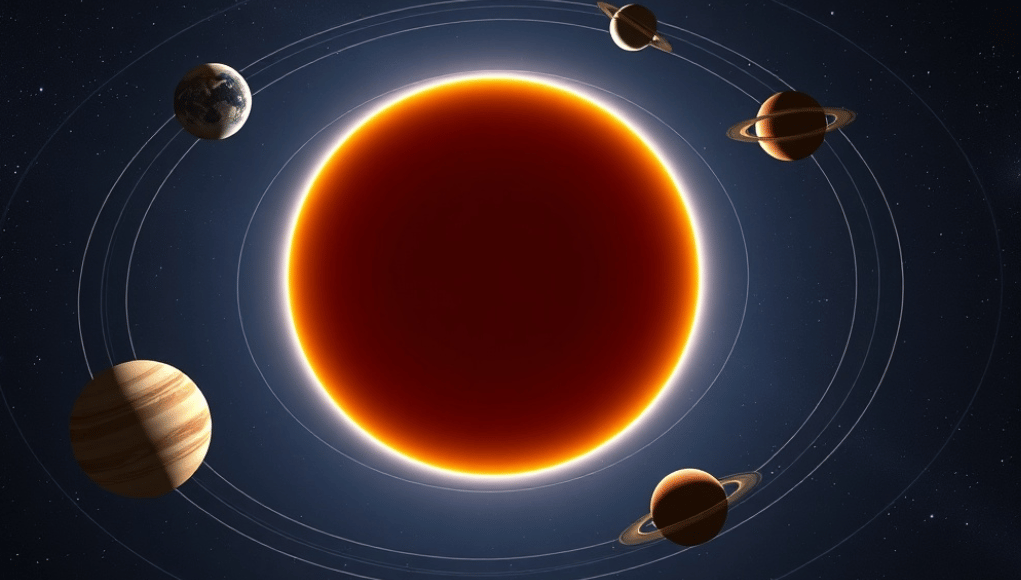
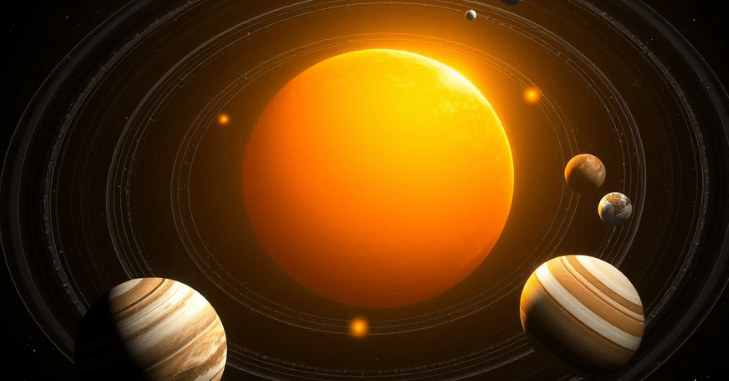
The Snapchat Solar System is an exciting and interactive feature that brings the wonders of our solar system directly to your smartphone. Combining augmented reality (AR) technology with educational content allows users to explore planets, their sizes, orbits, and unique characteristics in a fully immersive way.
From understanding planet order and visualizing orbital paths to discovering fascinating planetary facts, this feature transforms learning about space into a hands-on, engaging experience. Ideal for students, educators, and astronomy enthusiasts, the Snapchat Solar System makes exploring the universe both fun and educational.
What is the Snapchat Solar System?
The Snapchat Solar System offers a captivating and interactive way to explore the wonders of our solar system directly from a smartphone. Combining augmented reality (AR) technology with educational content, this feature allows users to visualize planet order, compare sizes, follow orbital paths, and discover fascinating facts about each planet.
Designed for both casual users and astronomy enthusiasts, the Snapchat Solar System transforms learning into an engaging, hands-on experience, making complex astronomical concepts accessible and fun.
| Feature/Section | Key Details / Highlights |
| App/Platform | Snapchat (AR Lens Explorer) |
| Purpose | Interactive exploration of the solar system via Snapchat Solar System |
| Planet Order | Mercury → Venus → Earth → Mars → Jupiter → Saturn → Uranus → Neptune (Pluto as dwarf planet) |
| Size Rankings | Largest: Jupiter → Saturn → Uranus → Neptune → Earth → Venus → Mars → Mercury → Pluto (smallest) |
| Orbit Periods | Mercury: 88 days, Venus: 225 days, Earth: 365.25 days, Mars: 687 days, Jupiter: 12 yrs, Saturn: 29 yrs, Uranus: 84 yrs, Neptune: 165 yrs |
| Interactive Features | Zoom & rotate planets, AR distance measurement, Planet Comparison Mode, trivia pop-ups |
| Educational Benefits | Teaches planet order, size, scale, orbital paths, spatial awareness, and fun facts through Snapchat Solar System |
| How to Use | Open Lens Explorer → Search “Solar System” → Activate AR lens → Move device → Tap planets for info |
| Tips | Use a flat surface, adjust the lighting, and rotate the device slowly for a smoother Snapchat Solar System AR experience |
| Audience | Students, educators, astronomy enthusiasts, and casual learners |
| Fun Comparisons | Jupiter fits 1,300 Earths, Saturn’s rings are wider than the planet, Venus has a slow rotation, and Neptune has fastest winds |
| Conclusion | Blends education with AR interactivity, making solar system exploration via Snapchat Solar System fun, engaging, and informative |
Planet Order in the Snapchat Solar System
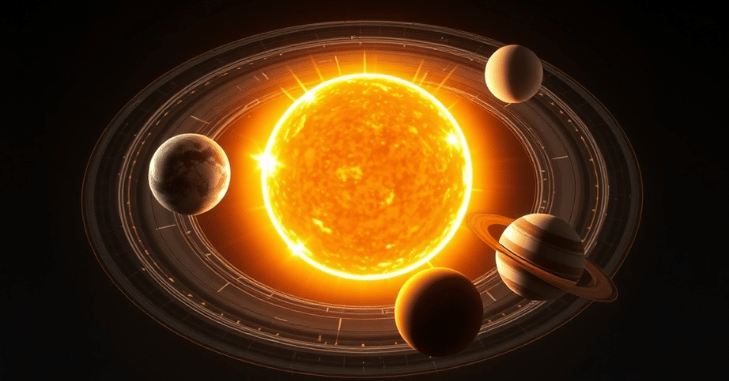
- Understanding planet order is the foundation of exploring the solar system.
- Planets are arranged based on their distance from the Sun, starting from the closest:
- Mercury: the Smallest planet, closest to the Sun
- Venus is known as Earth’s twin due to its similar size
- Earth, our home planet,is the only known life-bearing world
- Mars, the Red Planet, with fascinating surface features
- Jupiter, The Largest planet, is a gas giant with many moons
- Saturn is Recognizable for its iconic rings
- Uranus is an ice giant with a tilted rotational axis
- Neptune, The Furthest major planet, is known for its strong winds
- Pluto, now classified as a dwarf planet, is often included for reference.
- Each planet’s position affects its orbital period and distance from the Sun.
- Snapchat’s interactive AR allows users to visualize this order dynamically, rotating the planets around a 3D Sun model.
Planet Size Rankings
| Planet | Diameter (km) | Notes |
| Jupiter | 139,820 | The largest planet in the solar system |
| Saturn | 116,460 | Gas giant with prominent rings |
| Uranus | 50,724 | An ice giant with a tilted rotational axis |
| Neptune | 49,244 | An ice giant, known for its strong winds |
| Earth | 12,742 | Our home planet is, only known life-bearing world |
| Venus | 12,104 | Known as Earth’s twin due to its similar size |
| Mars | 6,779 | The Red Planet with unique surface features |
| Mercury | 4,879 | The smallest planet in the solar system |
| Pluto | 2,377 | Dwarf planet, often included for reference |
Fascinating Facts About Each Planet
Snapchat Solar System also provides bite-sized facts for each planet, making learning both interactive and fun.
Mercury
- The smallest planet in the solar system
- Surface temperatures range from -173°C to 427°C
- No moons or rings
Venus
- Rotates backward (retrograde rotation)
- Thick atmosphere made mostly of CO₂
- The surface is hotter than Mercury due to the greenhouse effect
Earth
- The only planet known to support life
- 70% of the surface is covered in water
- One natural satellite: the Moon
Mars
- Known as the Red Planet because of its iron oxide
- Home to the tallest volcano, Olympus Mons
- Two small moons: Phobos and Deimos
Jupiter
- The largest planet in the solar system
- Famous for its Great Red Spot, a giant storm
- Over 90 moons, including Ganymede, the largest moon in the solar system
Saturn
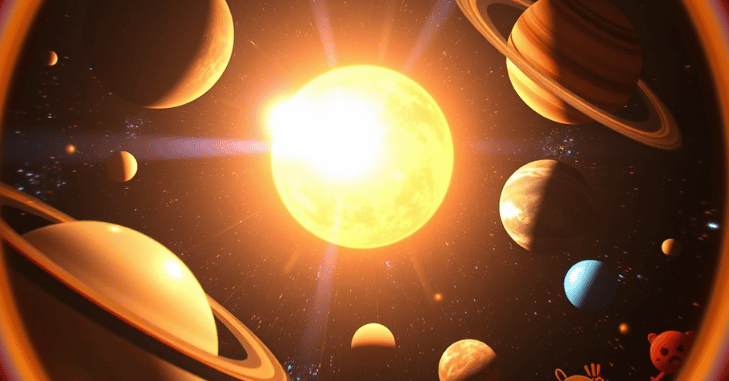
- Has the most prominent and visible rings
- Rings made of ice and rock particles
- 80+ confirmed moons, with Titan being the largest
Uranus
- Rotates on its side with extreme axial tilt
- The atmosphere contains methane, giving it a blue color
- 27 known moons
Neptune
- Strongest winds in the solar system, up to 2,100 km/h
- Deep blue color from methane
- 14 known moons
Orbit Charts and Planetary Paths
| Planet | Orbital Period | Notes / Key Features |
| Mercury | 88 Earth days | Closest planet to the Sun; fastest orbit |
| Venus | 225 Earth days | Slow retrograde rotation; second planet from the Sun |
| Earth | 365.25 days | Our home planet completes one full orbit in a year |
| Mars | 687 days | The Red Planet; nearly twice as long as Earth’s orbit |
| Jupiter | 12 years | Largest planet; gas giant with many moons |
| Saturn | 29 years | Famous for its rings, a gas giant |
| Uranus | 84 years | An ice giant rotates on its side |
| Neptune | 165 years | Furthest major planet; strong winds; ice giant |
Interactive Features on Snapchat
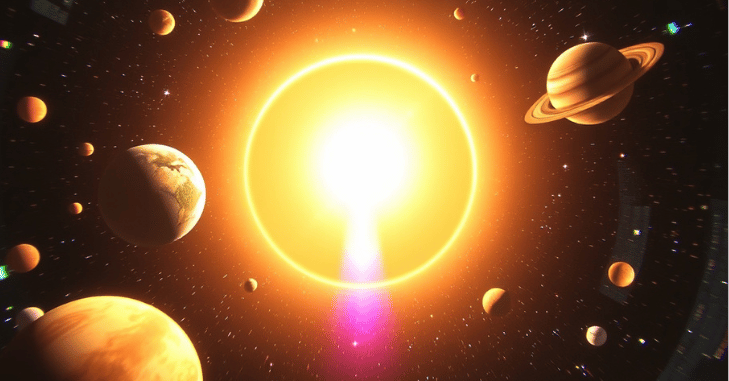
Snapchat adds a unique twist to exploring the solar system through its interactive learning tools. Users can zoom in and rotate planets to see each one up close, examining surface details and gaining a better understanding of their characteristics.
The AR distance measurement feature allows users to visualize the vast distances between planets, making the scale of the solar system more tangible. Additionally, the Planet Comparison Mode enables users to compare the sizes, orbits, and other metrics of different planets side by side.
As users explore, fun trivia pop-ups appear, providing interesting facts and enhancing the educational value of the experience. Together, these features make the Snapchat Solar System both engaging and informative, combining entertainment with science.
How to Use the Snapchat Solar System Feature?
- Open Snapchat and go to the Lens Explorer.
- Search for “Solar System” or related AR lenses.
- Activate the lens to launch a 3D model of the solar system.
- Move your device around to explore planets and their orbits.
- Tap planets for facts, size comparisons, and other interactive elements.
Tips for a Better Experience
- Use a flat surface for accurate AR placement.
- Adjust lighting to ensure clearer visuals.
- Rotate your device slowly to follow planetary orbits smoothly.
Educational Benefits
The Snapchat Solar System is more than just a visual tool—it’s an educational resource:
- Enhances spatial awareness of planet positions and distances
- Teaches size and scale through interactive comparison
- Explains orbital periods and planet behavior in a fun way
- Encourages curiosity about astronomy and space exploration
Planet Rankings and Fun Comparisons
- Size and diameter
- Distance from the Sun
- Orbital speed
- Number of moons
Fun Facts for Comparison
- Jupiter could fit 1,300 Earths inside it
- Saturn’s rings are wider than the planet itself
- Venus rotates more slowly than it orbits the Sun
- Neptune has the fastest winds in the solar system
These comparisons make it easier to remember planetary features while exploring the AR model.
Conclusion
The Snapchat Solar System offers an innovative and immersive way to explore the wonders of our solar system, blending education with interactive entertainment. By allowing users to visualize planet order, compare sizes, follow orbital paths, and discover fascinating planetary facts, this AR feature transforms learning into a hands-on experience.
Ideal for students, educators, and space enthusiasts, the Snapchat Solar System makes complex astronomical concepts easy to understand and engaging to explore.
With its combination of interactive tools, trivia, and realistic visualizations, it ensures that users can experience the solar system in a way that is both fun and educational, bringing the universe closer to their fingertips.
Want to know about The Main Theme of Plato’s Republic and Its Relevance Today Check out our Education category.
FAQs
You must be a Snapchat+ subscriber and activate the function in the Snapchat+ settings in order to view the solar system on Snapchat.
For new subscribers, Solar System is turned off by default.
On Snapchat, the gold star indicates that someone has viewed the user’s photos within the last 24 hours.